
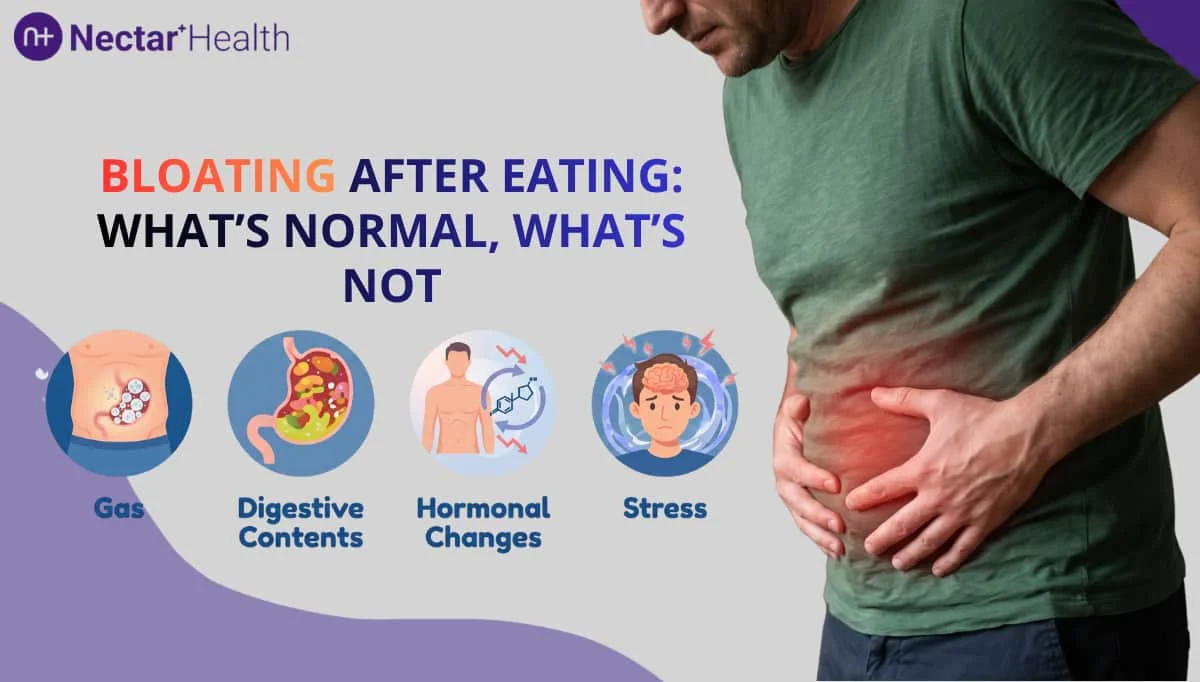
Bloating After Eating: Causes and Relief
You finish lunch, and within the hour your waistband feels tight, your stomach feels like a balloon, and you wonder what went wrong. If this sounds familiar, you are in good company. Almost everyone feels bloated after a meal now and then.
Still, “why do I feel bloated after eating?” has more than one answer. Sometimes it is just a heavy plate of food eaten in a hurry. Sometimes it points to something that deserves a proper check-up. This guide covers both so you know what is normal and what is not.
What Is Bloating After Eating?
Bloating is a feeling of fullness, tightness or pressure in the tummy. The NHS lists symptoms such as a full or bigger-feeling tummy, discomfort, rumbling noises and passing more wind than usual. nhs.uk
It helps to separate two terms doctors use:
- Bloating is the sensation of fullness or pressure. Your tummy may look completely normal.
- Abdominal distension is a measurable, visible increase in the size of the abdomen. The two often occur together but can also occur separately. [1] gastroenterologyandhepatology
Normal fullness feels different. After a good meal you feel satisfied, and the feeling eases as digestion proceeds. Bloating feels uncomfortable, tight or swollen, and it can linger for hours.
Common Symptoms of Bloating
Bloating rarely travels alone. You may notice:
- A swollen or tight stomach, sometimes with a visibly bigger belly
- Excessive gas or passing wind
- Burping (everyone burps, and belching up to around 30 times a day is considered typical) nih
- Stomach rumbling or gurgling
- Cramping or general discomfort
- Feeling unusually full after a small meal
Having some gas symptoms is normal, especially during or after meals. The concern begins when symptoms are frequent, bothersome or interfere with daily life. [2] nih
Why Does Bloating Happen After Eating?
Gas builds up in the gut in two main ways: you swallow air, or bacteria in the large intestine ferment food that wasn’t fully digested earlier. [2] Several everyday habits and conditions feed into this.
Overeating. A large meal simply stretches the stomach and slows things down.
Eating too fast. You swallow more air when you eat or drink quickly, chew gum, suck hard candy, smoke or have fizzy drinks. Talking while eating adds to it. [2][3] nih
Gas-producing foods. Certain carbohydrates reach the large intestine undigested, where gut bacteria break them down and produce gas.
Carbonated drinks. Soda and sparkling water add gas directly.
Constipation. When stool sits in the bowel, fermentation continues and gas gets trapped. This is a very common and often overlooked cause.
Food intolerances. Lactose is the classic example. Your body can’t properly handle a particular food component, so you get bloating, gas or loose stools.
Not just gas. Research suggests many people who feel bloated don’t actually have more gas than others. Their gut may be more sensitive to normal amounts. [1] So don’t assume every episode of bloating is simply “gas” or “overeating.”
Foods That Commonly Cause Bloating
If you are searching for foods to avoid for bloating, here are the usual suspects:
- Beans, lentils and chickpeas: rajma, chole, moong, chana dal
- Cabbage, cauliflower and onions
- Dairy: milk, paneer, ice cream (especially if you are lactose intolerant)
- Wheat-based foods: roti, bread, naan, biscuits in large amounts
- Fried foods: pakoras, samosas, puris, which slow stomach emptying
- Carbonated drinks
The NIDDK includes cabbage-family vegetables, onions and cauliflower among foods that may produce more gas. [2] medicalnewstoday
Here’s the important part: triggers vary from person to person. Rajma may bother you but not your sister. Curd may suit you better than milk. These are common triggers, not forbidden foods, and most of them are nutritious. Don’t cut them out on a hunch.
Medical Conditions That Can Cause Frequent Bloating
When bloating keeps coming back, a health condition may be involved:
- Lactose intolerance: trouble digesting the sugar in milk.
- Irritable bowel syndrome (IBS): a gut-brain interaction disorder. Bloating and distension are reported in a large share of people with IBS. [1] gastroenterologyandhepatology
- Coeliac disease: an autoimmune reaction to gluten that damages the small intestine. It is different from simply feeling heavy after eating roti.
- Constipation
- Functional dyspepsia: ongoing upper-stomach discomfort, early fullness or bloating with no structural cause found.
- Small intestinal bacterial overgrowth (SIBO), gastro-oesophageal reflux, gastroparesis (slow stomach emptying) and other digestive conditions. [2]
Bloating can also have non-digestive causes, such as hormonal changes around periods and some medicines. Cleveland Clinic notes that hormone shifts during periods, pregnancy and perimenopause can cause fluid retention and bloating. [3] clevelandclinic
Why Do You Feel Bloated After Every Meal?
Occasional bloating is common. But bloating after every meal suggests a pattern worth looking into. Possible reasons include:
- A food intolerance you haven’t identified
- Chronic constipation (you may be going daily and still be constipated)
- IBS or functional dyspepsia
- Eating habits like rushing meals, or very large dinners
- Coeliac disease or another condition needing tests
The NHS advises seeing a GP if you feel bloated regularly or if changing your diet hasn’t helped. [4] Some NHS-based guidance gives a rough yardstick of three weeks or more. One NHS factsheet mentions bloating for 3 weeks or more, or more than 12 times a month. Treat these as prompts to get checked, not exact cut-offs. nhs.ukaxahealth
How to Get Relief from Bloating After Eating
Here’s how to reduce bloating after eating in practical ways. None of these will work instantly for everyone, but they’re safe to try:
- Slow down. Chew well, put your spoon down between bites and keep your mouth closed while chewing.
- Take a gentle walk. Ten to fifteen minutes after a meal helps keep things moving. Skip intense exercise right after eating.
- Sip water. Small sips through the meal and between meals are better than gulping a large glass.
- Avoid lying down straight away. Sit upright, and leave a couple of hours between dinner and bed.
- Try gentle warmth. A warm compress or hot-water bag on the tummy can feel soothing for some.
- Keep a food and symptom diary. Note what you ate, when, and how you felt. Two weeks of notes often reveal a pattern better than guessing.
- Cut back on fizzy drinks, chewing gum and straws.
Home Remedies for Bloating
Home remedies for bloating can be comforting, but the evidence behind most is limited. Be realistic about what they can do.
Ginger tea. Widely used for nausea and digestion. Evidence for bloating specifically is limited. Go easy if you are on blood-thinning medicines or have gallstones, and talk to your doctor first.
Peppermint. Enteric-coated peppermint oil has some evidence in IBS. British Society of Gastroenterology guidance says it may help global IBS symptoms and abdominal pain, with reflux as a common side effect, though the evidence is rated as low quality. [5] People with acid reflux may find it makes things worse, so it isn’t for everyone. Peppermint tea is milder, with less proven benefit. medicaldialogues
Ajwain, saunf (fennel) and jeera. These are traditional after-meal habits in many Indian homes and are generally safe in food-sized amounts. Good-quality research proving they relieve bloating is limited, so think of them as comfort, not treatment. Pregnant women should check with their doctor before taking ajwain or fennel in concentrated forms.
Hing (asafoetida). Commonly added to dal to make it easier to digest. Evidence is mostly traditional rather than clinical. A pinch in cooking is fine.
Warm water. Soothing for many people, though it won’t “flush out” gas.
Please avoid remedies that promise instant relief or “detox” your gut. Over-the-counter options such as antacids or simethicone are available, but whether they suit you depends on the cause, so check with a pharmacist or doctor. [4]
Foods That May Help Reduce Bloating
No food cures bloating. But some choices tend to be easier on the gut for many people:
- Dal, khichdi and well-cooked vegetables: lighter on digestion than heavy, oily gravies.
- Curd or buttermilk (chaas): often better tolerated than milk, especially for people with lactose sensitivity.
- Rice and roti in moderate portions alongside vegetables and dal.
- Seasonal fruits like papaya or banana. Notice how each one affects you.
- Oats, vegetables and fruit for fibre, increased gradually.
- Water-rich foods such as cucumber and bottle gourd (lauki).
Soaking and thoroughly cooking rajma, chole and other pulses, and discarding the soaking water, helps many people tolerate them better. Don’t drop them entirely. They are affordable and protein-rich.
How to Prevent Bloating After Meals
To prevent bloating after meals, build small habits rather than chasing quick fixes:
- Portion control. Smaller, regular meals suit many people better than one huge meal.
- Mindful eating. Sit down, put the phone away, and chew properly.
- Regular physical activity. Walking, yoga or cycling supports normal gut movement. The BSG recommends regular exercise for everyone with IBS. medicaldialogues
- Hydration. Drink enough water through the day.
- Fibre, added slowly. A sudden jump can increase gas. Increase it gradually and with enough fluids.
- Treat constipation properly. Regular timing, fibre, fluids and activity matter. If it persists, ask a doctor.
- Be careful with elimination diets. Don’t cut out wheat, dairy or other major food groups without guidance from a doctor or registered dietitian. If a structured plan such as a low-FODMAP diet is needed, it should be dietitian-supervised. [5][6]
- Don’t self-prescribe supplements. Probiotics, enzymes and herbal products aren’t universal solutions, and their usefulness depends on the cause.
When Should You See a Doctor?
See a doctor if bloating is frequent, persistent or getting worse, or if your diet changes haven’t helped. The NHS also lists bloating with unintentional weight loss, or with blood in your poo, as reasons to see a GP. nhs.uk
Book an appointment soon if you notice:
- Unexplained weight loss
- Blood in stool, or black stools
- Persistent vomiting
- Difficulty swallowing
- Fever
- A significant change in bowel habits (new constipation, diarrhoea or both)
- Severe or persistent abdominal pain
- Loss of appetite or feeling full very quickly
- A new lump or swelling in your tummy
- Persistent bloating in women, which should be checked rather than brushed off. Gynaecological causes need to be ruled out.
The NHS suggests getting urgent advice if bloating comes with vomiting, diarrhoea, constipation or stomach ache. [4] nhs.uk
Seek urgent medical attention immediately if you have severe abdominal pain with marked swelling, repeated vomiting, or you can’t pass stool or gas. These can signal a blockage or another emergency.
Your doctor may take a history, examine you, and order tests such as blood tests, stool tests or imaging, depending on your symptoms. Treatment depends on the underlying cause.
Sources
- Cangemi DJ, Lacy BE. A Practical Approach to the Diagnosis and Treatment of Abdominal Bloating and Distension. Gastroenterology & Hepatology, 2022. https://www.gastroenterologyandhepatology.net/archives/february-2022-2/a-practical-approach-to-the-diagnosis-and-treatment-of-abdominal-bloating-and-distension/
- NIDDK. Symptoms & Causes of Gas in the Digestive Tract. https://www.niddk.nih.gov/health-information/digestive-diseases/gas-digestive-tract/symptoms-causes
- Cleveland Clinic. Bloated Stomach. https://my.clevelandclinic.org/health/symptoms/21740-bloated-stomach (see also Aerophagia: https://my.clevelandclinic.org/health/diseases/aerophagia)
- NHS. Bloating. https://www.nhs.uk/symptoms/bloating/
- Vasant DH et al. British Society of Gastroenterology guidelines on the management of irritable bowel syndrome. Gut 2021;70:1214–1240. https://gut.bmj.com/content/early/2021/05/24/gutjnl-2021-324598.full.pdf
- Mayo Clinic Care Network. Bloating. https://www.mymlc.com/health-information/definitions/b/bloating/
Editor’s note: add citation placeholders for any further claims added later, and have a qualified Indian gastroenterologist or dietitian review before publishing.
Medical Disclaimer
This article is for general information and education only. It is not a substitute for professional medical advice, diagnosis or treatment. Every person’s digestive health is different. Always seek the advice of a qualified doctor about any medical condition, and never ignore or delay seeking medical advice because of something you have read here. If you have severe pain, repeated vomiting, blood in stool or cannot pass stool or gas, seek emergency care immediately.


