How Long Does It Usually Take to Conceive?
Many people grow up believing pregnancy happens the first time you try. In reality, even when both partners are healthy, the chance of conceiving in any single menstrual cycle is far from certain. Pregnancy needs a series of things to line up: an egg has to be released, sperm have to reach it at the right time, fertilisation has to occur, and the embryo has to implant in the uterus. Each step can take a little time.
This is why it is common for conception to take several months. The NHS figures mentioned above come from the UK and describe couples having regular unprotected sex, so they are a helpful guide rather than a promise for any individual couple. The same NHS information notes that for couples who have been trying for more than three years without success, the chance of conceiving naturally in the following year is about 1 in 4 or lower, which is one reason why waiting indefinitely is not usually the best approach.
The menstrual cycle and the fertile window
An egg survives for only about a day after ovulation, but sperm can live inside the female reproductive tract for several days. This means the "fertile window" is roughly the five or six days leading up to and including ovulation. Sex during this window gives you the best chance of conceiving in that cycle. Outside it, pregnancy is unlikely.
If your cycle is regular, ovulation usually happens around the middle of the cycle, though it can vary from month to month. This is why ovulation and conception are so closely linked, and why cycle irregularity can make timing harder.
Why every couple's experience is different
Two couples of the same age can have very different timelines, and that is entirely normal. Age, ovulation, sperm health, medical conditions and sheer chance all play a part. Not getting pregnant straight away does not automatically mean you are infertile. Doctors often use the term "subfertility" for couples who are taking longer than average but may still conceive naturally without treatment.
What Factors Affect How Quickly You Get Pregnant?
Fertility is a shared matter. Problems with conception are sometimes linked to the woman, sometimes to the man, sometimes to both, and in a fair number of couples no clear cause is found even after testing. It is never useful to blame one partner. Here are the main factors doctors look at.
Age. Female fertility gradually declines with age, with the decline becoming more noticeable after the mid-30s, and the number and quality of eggs fall over time. Male fertility also changes with age, although more gradually. Sperm quality and the chance of conceiving can decline in older men too.
Ovulation and cycle regularity. You need to release an egg regularly to conceive. Very long, very short, irregular or absent periods can be a sign that ovulation is not happening every month.
Timing of intercourse. Because the fertile window is short, having sex only on a few random days of the cycle can reduce your chances, even when everything else is fine.
Sperm health. Sperm count, how well sperm move (motility), and their shape all influence fertility. Men often have no symptoms at all, which is why a semen analysis is the only reliable way to check.
Medical conditions. Polycystic ovary syndrome (PCOS), endometriosis, thyroid disorders, blocked fallopian tubes, fibroids and certain infections can all affect fertility. In men, conditions such as varicocele (enlarged veins in the scrotum), past infections or hormonal problems may play a role. PCOS and thyroid problems are common in India, so they are worth keeping in mind if your periods are irregular.
Lifestyle. Smoking, tobacco chewing, heavy alcohol use, recreational drugs, being significantly underweight or overweight, and some medications can all reduce fertility in either partner.
Medical and reproductive history. Previous pelvic infections, abdominal or pelvic surgery, an ectopic pregnancy, or cancer treatment can affect fertility.
None of this means that having one of these factors makes pregnancy impossible. It simply helps explain why a proper evaluation, rather than guesswork, is the best way to find out what is happening in your own case.
How to Improve Your Chances of Conceiving Naturally
There is no magic formula, and no lifestyle change can guarantee a pregnancy. But some steps are supported by medical guidance and are worth considering as part of pregnancy planning.
- Learn about your cycle. Tracking periods, noticing changes in cervical mucus, or using ovulation predictor kits can help you identify your fertile window. You do not need to become obsessive about it.
- Have regular sex through the cycle. Having sex every two to three days, rather than only on a single "perfect" day, covers the fertile window without turning intimacy into a chore.
- Book a preconception check-up. A doctor can review your general health, vaccinations, existing conditions and any medicines you take, and advise whether anything needs adjusting before pregnancy.
- Talk to your doctor about folic acid. Folic acid taken before conception and in early pregnancy helps reduce the risk of neural tube defects in the baby. The usual preventive dose is 400 micrograms a day, but some women need a higher dose, so ask your doctor what is right for you.
- Avoid smoking and recreational drugs, and discuss alcohol. This applies to both partners, and it includes smokeless tobacco. Ask your doctor for advice on alcohol while you are trying to conceive.
- Support any existing health conditions. Diabetes, thyroid problems, high blood pressure and PCOS are best managed with professional guidance before pregnancy.
- Be wary of unproven remedies. Supplements, "fertility boosters" and home remedies are often promoted without good evidence, and some can be harmful. Please check with a doctor before starting any of them.
When Should You See a Fertility Doctor?
The general guidance from the American Society for Reproductive Medicine (ASRM) is based on the woman's age and on how long you have been having regular, unprotected intercourse:
- Under 35: consider a fertility evaluation after 12 months without a pregnancy.
- Age 35 to 39: consider an evaluation after 6 months.
- Age 40 and over: it is sensible to seek medical advice promptly rather than waiting several months, since age-related decline can make time more valuable.
These are general guidelines, not strict rules. You are always welcome to speak to a doctor sooner if you are worried, and many doctors are happy to offer reassurance and advice about timing at an early stage.
When Should You Seek Fertility Advice Earlier?
Some couples should not wait for the standard timelines. It may help to see a doctor sooner if either partner has any of the following:
- Irregular, infrequent or absent periods.
- Known or suspected PCOS or endometriosis.
- A history of pelvic infection, ectopic pregnancy or pelvic or abdominal surgery.
- A known sperm or testicular problem, or a history of testicular injury or surgery.
- Sexual difficulties that make intercourse or ejaculation challenging.
- Past chemotherapy, radiation or other treatment that may affect fertility.
- Another medical condition linked with reduced fertility.
Everyone's situation is different, so please discuss your own circumstances with a qualified doctor, who can advise on the right timing for you.
What Happens During a Fertility Evaluation?
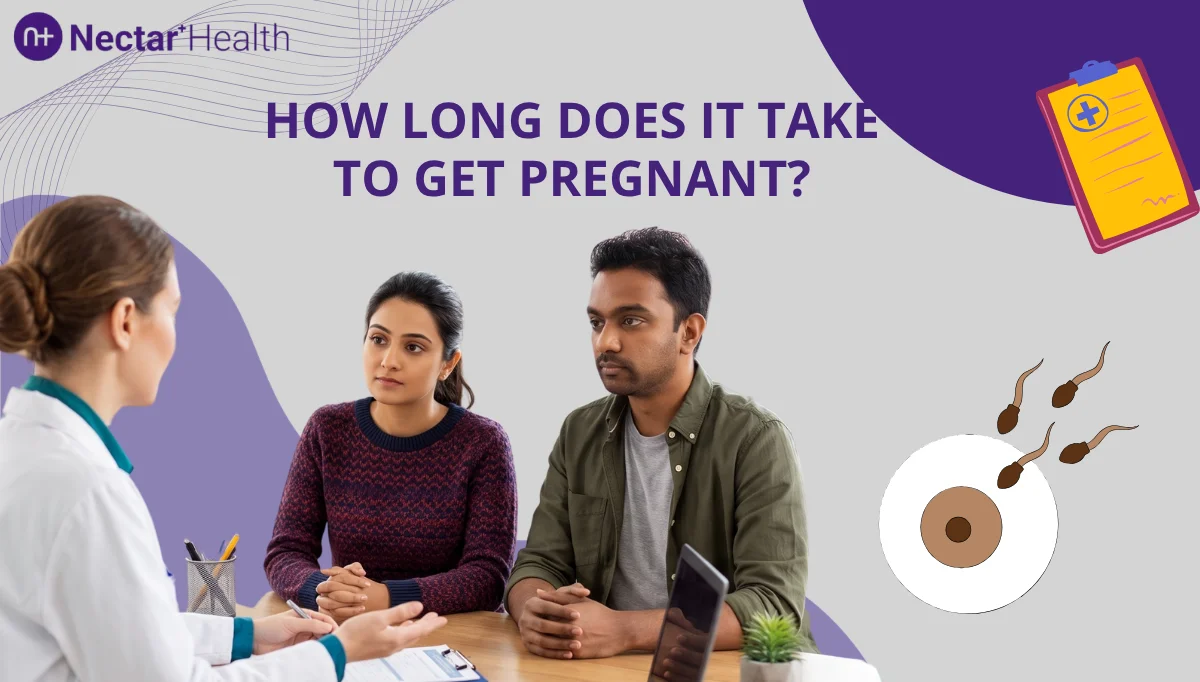
Knowing what to expect can make the first appointment less stressful. Ideally, both partners attend together, because fertility involves both of you.
At a first consultation, a doctor will usually:
- Ask about your medical, menstrual, sexual and reproductive history, including any earlier pregnancies and treatments.
- Ask about lifestyle, medicines and work or environmental exposures.
- Carry out a physical examination where appropriate.
Depending on your history, the following tests may be suggested:
- Checking for ovulation, often through blood hormone tests or tracking, when it is indicated.
- Semen analysis for the male partner. It is simple, non-invasive and one of the most important first tests.
- Blood tests and pelvic ultrasound when clinically appropriate, for example to assess hormones, the thyroid, the ovaries and the uterus.
- Further tests, such as checking whether the fallopian tubes are open, if your history or first results point to a need.
Not every couple needs every test. A good evaluation is tailored to you. It is also worth knowing that evaluating both partners is standard practice, rather than assuming the problem lies with the woman.
What If You Are Diagnosed With a Fertility Problem?
A diagnosis can feel overwhelming, but many fertility problems are treatable, and a number of couples go on to conceive with relatively simple help. Possible next steps depend on the cause, your ages, your medical history and your preferences. They may include:
- Treating underlying conditions, such as thyroid disease or infections.
- Guidance on timing intercourse around ovulation.
- Ovulation-induction medicines, when appropriate. These should only be taken under medical supervision.
- Surgery for selected problems, such as certain uterine or tubal conditions, endometriosis or varicocele.
- Intrauterine insemination (IUI), where prepared sperm are placed directly in the uterus, when indicated.
- In vitro fertilisation (IVF), where eggs are fertilised outside the body and the embryo is transferred to the uterus, when appropriate.
No single treatment is right for every couple, and no clinic can honestly promise a result. Ask your specialist to explain why a treatment is recommended, what the realistic chances are for your situation, and what the risks and costs involve.
Trying to Conceive Can Be Emotionally Difficult
Waiting month after month for a result can be draining. Many people describe cycles of hope and disappointment, and it can feel lonely, especially when friends or relatives seem to conceive easily or ask pointed questions.
A few things may help:
- Talk openly with your partner. You may cope differently, and that is okay. Share how you feel without assigning blame.
- Avoid comparing yourself with others. Every journey is different, and what you see from the outside rarely tells the full story.
- Set boundaries. You are entitled to decline questions about when you will have a baby, or to say you would rather not discuss it.
- Look after your wellbeing, with rest, movement, and time together that is not about conceiving.
- Consider counselling or support. If anxiety, sadness or strain on your relationship is building up, a counsellor or support group can help.
Stress is understandably part of this experience, but everyday stress alone is not considered a cause of infertility, so please do not blame yourself.
Final Thoughts
How long does it take to conceive? There is no single answer, and it differs from one couple to the next. Many conceive within a year, others take longer, and neither is a sign that you did anything wrong. Fertility challenges can affect either partner, and understanding the factors involved helps you make calmer decisions.
If you are under 35 and have been trying for 12 months, 35 or older and have been trying for 6 months, over 40, or have a known risk factor, it may be a good time to speak to a qualified fertility specialist. Seeking advice is not a failure. It is simply a way to understand your options and take the next step with support.
This article is for general information and does not replace advice from a qualified healthcare professional.