Fracture Fixation (ORIF) Surgery in Gajuwaka
Patient guide to Fracture Fixation (ORIF) Surgery in Gajuwaka: average cost (₹1,20,000–₹2,80,000), recovery timeline, procedure types, and how to find the right specialist. Book a ...
 WhatsApp Us
 What is Fracture Fixation (ORIF) Surgery?
Fracture Fixation (ORIF) Surgery
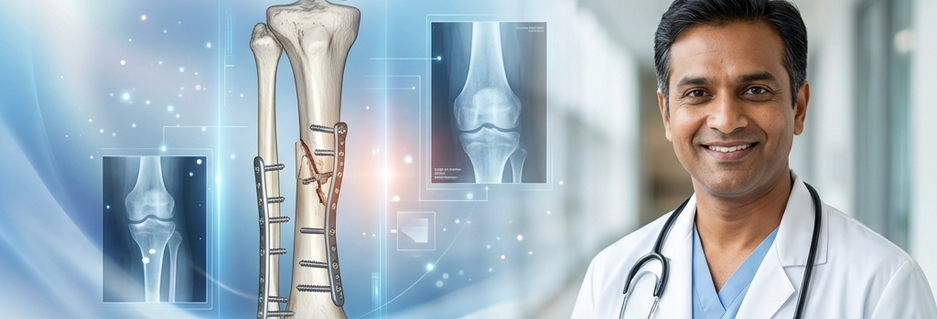
If you or someone you know is navigating a diagnosis that points toward Fracture Fixation (ORIF), the quality of the specialist team and hospital you choose makes a measurable difference to outcomes. NectarPlus Health connects patients in Gajuwaka with board-certified Orthopaedic Surgeons and accredited surgical centres.
Clinically Accredited Centres
Every hospital in the NectarPlus network meets national accreditation standards for surgical care and patient safety — including sterile theatre protocols and post-operative monitoring.
Experienced Surgical Teams
The Orthopaedic Surgeons in our Gajuwaka network have performed this procedure repeatedly, with outcomes that align with published clinical benchmarks.
Minimally Invasive Options
Where your anatomy and case profile allow, keyhole or laparoscopic approaches are preferred — less tissue disruption, shorter hospital stay, faster rehabilitation.
Pre-Op Evaluation Included
Every patient receives a structured pre-operative assessment covering imaging, blood work, and anesthesia fitness — before a final surgical plan is confirmed.
Structured Post-Op Support
Discharge doesn't mean the care ends. Physiotherapy, wound reviews, and follow-up appointments are part of the standard care package for patients recovering from Fracture Fixation (ORIF) Surgery.
When is Fracture Fixation (ORIF) Surgery Needed?
The decision to proceed with Fracture Fixation (ORIF) Surgery is one a patient and specialist reach together — it's not a threshold you cross automatically. What typically tips the scale is a combination of factors: pain that's persistent enough to meaningfully affect your daily life, imaging that shows damage inconsistent with what conservative care can address, and a failure of non-surgical interventions to hold the situation stable. In Gajuwaka, experienced specialists will often trial structured rehabilitation before placing surgery on the table. When that rehabilitation doesn't produce the expected improvement — or when the structural findings indicate the problem is past the point of conservative correction — surgical intervention becomes the clinically justified option.
Symptoms of Fracture Fixation (ORIF) Surgery
Not every symptom announces itself loudly. Many people living with conditions requiring Fracture Fixation (ORIF) Surgery spend months attributing their pain to fatigue or overexertion before seeking a proper evaluation. Persistent aching that worsens with specific movements, visible swelling that recurs despite rest, and a noticeable decline in your ability to move freely — these are the patterns that matter. In Gajuwaka, patients often arrive having tried home remedies and general pain relief for extended periods. By the time imaging is done, the structural picture is usually clearer than the symptom history suggests. A clinical examination, paired with your account of how the symptoms have evolved, gives your Orthopaedic Surgeon the full context they need to assess urgency.
Causes
Ask a Orthopaedic Surgeon what causes most cases requiring Fracture Fixation (ORIF) Surgery, and the answer is rarely simple. There's usually a combination at play — age-related cartilage loss working alongside a history of strain or repetitive movement patterns that weren't ergonomically sound. In younger patients, a past injury that healed improperly or a congenital structural quirk often sets the trajectory. What clinical teams in Gajuwaka consistently find is that the biological picture — what the tissue looks like on imaging — doesn't always match the severity of what the patient reports feeling. Some patients present with advanced degeneration but manageable pain; others have significant discomfort with findings that look moderate. Both presentations matter and both inform the approach.
Diagnosis
Getting to a clear diagnosis before Fracture Fixation (ORIF) Surgery involves more than a single scan. The process typically starts with a thorough physical examination — your Orthopaedic Surgeon will assess range of motion, localized tenderness, joint stability, and how you compensate during movement. From there, imaging is ordered based on what the exam suggests. X-rays give a structural baseline; MRI provides soft tissue detail that X-rays can't capture; ultrasound is occasionally used for dynamic assessment. Blood panels are ordered not just to rule out systemic conditions but to confirm surgical fitness. In Gajuwaka, the diagnostic process is treated as a clinical conversation — each result either narrows the picture or raises a question that prompts another step.
Types of Fracture Fixation (ORIF) Surgery
The type of Fracture Fixation (ORIF) Surgery performed varies by patient. Some cases call for a minimally invasive laparoscopic or arthroscopic approach — a few small ports, a camera, specialized instruments, and a substantially faster recovery. Others require an open surgical technique where the anatomy or extent of damage demands more direct access. Robotic-assisted options are available at select centres in Gajuwaka for procedures where precision and tremor elimination are particularly critical. What determines the approach isn't a preference — it's the clinical reality of your case. The treating Orthopaedic Surgeon will make that assessment and explain the trade-offs specific to each option.
Fracture Fixation (ORIF) Surgery Procedure
What happens during Fracture Fixation (ORIF) Surgery is more methodical than most patients expect. Before the surgeon makes any incision, the team has gone through a standardized safety checklist — patient identity confirmed, procedure site marked, allergies reviewed, instruments counted. Anesthesia is administered with a specialist monitoring your vitals throughout. The surgical field is draped and prepared. The Orthopaedic Surgeon then proceeds through the operative steps with a trained scrub team assisting. Specific details of what's corrected or replaced depend on your case, but the overall process — incision, repair or reconstruction, closure, sterile dressing — follows a protocol designed to minimize risk and maximize precision. You'll be monitored in recovery until your vitals are stable before being transferred to your ward in Gajuwaka.
Benefits of Fracture Fixation (ORIF) Surgery
There's a reason Fracture Fixation (ORIF) Surgery has a high patient satisfaction rate — the outcomes are concrete. Pain levels drop substantially for the majority of patients within weeks of the procedure. Range of motion improves over months of structured rehabilitation. Activities that had become restricted — physical work, extended walking, recreational sport — become accessible again. The structural repair isn't a patch; it's a correction. For most patients in Gajuwaka, the combination of pain relief, restored function, and the confidence to move without fear represents a meaningful return to the life they had before the condition progressed.
⚠️ Possible Risks & Complications
Talking honestly about risk is part of preparing for Fracture Fixation (ORIF) Surgery — not something to gloss over. In practice, most patients come through the procedure without significant complications. The ones that do occur are generally manageable: localized infection treated with a short course of targeted antibiotics, swelling that resolves over weeks, or temporary stiffness that physiotherapy addresses. Rare complications — bleeding requiring transfusion, implant-related issues in joint procedures, or prolonged healing in patients with underlying conditions — are exceptions, not the norm. Your Orthopaedic Surgeon in Gajuwaka will discuss your individual risk profile before the procedure. If you have diabetes, a clotting disorder, or are on long-term medications, those factors are specifically accounted for in the surgical plan.
Recovery After Fracture Fixation (ORIF) Surgery
| Timeline | Recovery Milestone |
|---|---|
| Recovery Timeline | |
| 3–6 months |
90% success rate for Fracture Fixation (ORIF) Surgery
Success Rate: 90–95%
Fracture Fixation (ORIF) Surgery Cost in Gajuwaka
Factors Affecting Cost
Government vs private facility
Senior surgeon vs junior
Metro cities cost more
General vs private room
Open vs Laparoscopic
Your policy coverage
Most health insurance plans cover Fracture Fixation (ORIF) Surgery. Contact us to check your eligibility.
Why Choose Us for Fracture Fixation (ORIF) Surgery?
Disease Diagnostics
Our expert surgeons perform a thorough diagnosis to identify the root cause and recommend the best treatment plan.
Instant & Emergency Cases
We prioritize urgent cases and provide immediate medical attention to critical patients.
Hassle-free Insurance
We handle all insurance paperwork and facilitate cashless treatment at network hospitals.
Post-Surgery Care
Comprehensive follow-up consultations and recovery assistance after your procedure.
Post-Operative Care
Diet & Lifestyle
Personalized diet plans for faster recovery
Recovery Follow-up
Scheduled check-ups with your surgeon
Free Cab Facility
Complimentary pick-up and drop for visits
24*7 Patient Support
Round-the-clock assistance via chat & call
Speak to our expert surgeon for Fracture Fixation (ORIF) Surgery
📞 Call 08069159999Frequently Asked Questions about Fracture Fixation (ORIF) Surgery
What Our Patients Say
Dr. Darsh Goyal
MBBS, MS - Orthopaedics
References & Sources
- Humeral Shaft Fracture Fixation Incidence Rates.12.Aspx — journals.lww.com
Medical Disclaimer
The clinical information on Carpal Tunnel Surgery in Gajuwaka provided here has been reviewed by a qualified specialist and is intended for patient education only. It does not constitute medical advice, diagnosis, or a recommendation to pursue any specific treatment. Please consult a licensed physician before making healthcare decisions.

