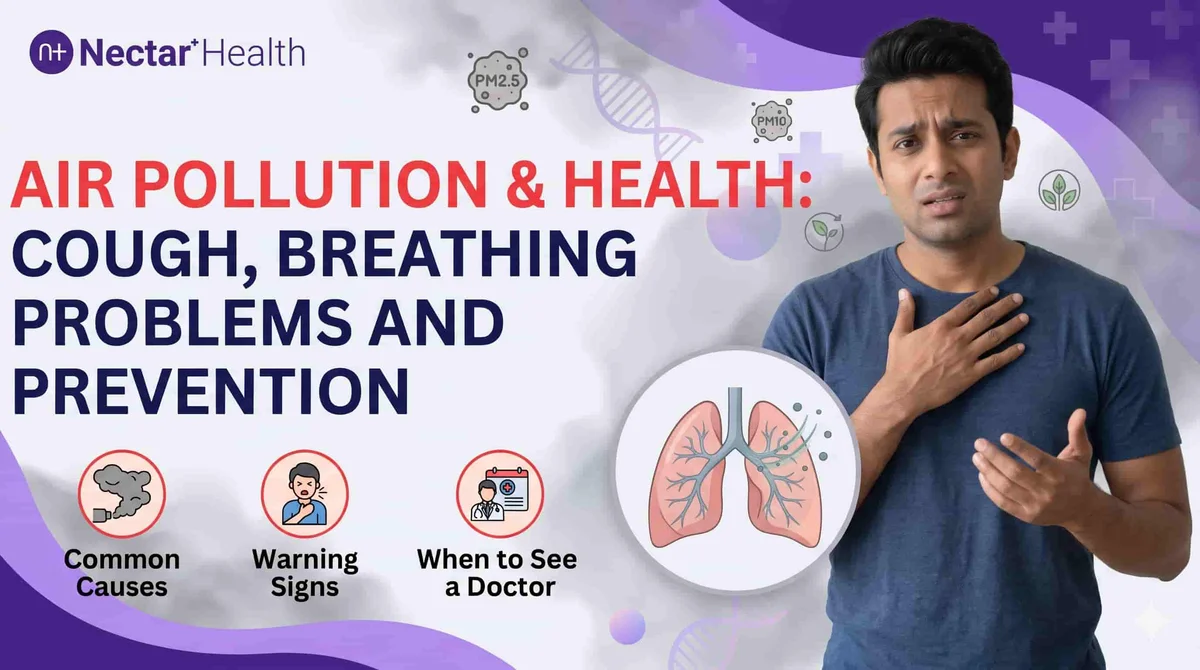
Air pollution and health are now closely tied together, especially for people living in Indian cities. Air pollution affects health by releasing tiny particles and harmful gases into the air we breathe, which can irritate the airways, trigger cough and breathlessness, and over time raise the risk of lung and heart disease.
If you live in Delhi, Lucknow, Kolkata, Mumbai or almost any large Indian city, you probably know this feeling. You step out for a morning walk in November and your throat scratches. Your eyes water on the drive to work. A cough that started "just for a few days" is still hanging around three weeks later. Many families now check the Air Quality Index (AQI) as routinely as they check the weather.
This is not just an inconvenience. The World Health Organization (WHO) describes air pollution as one of the major environmental risks to human health worldwide. In this guide, we explain in plain language how polluted air affects your body, which symptoms to watch for, who needs extra care, and what you can realistically do to protect yourself and your family.
This article is for general education only. It does not replace advice from a qualified doctor.
How Does Air Pollution Affect Your Health?
To understand the effects of air pollution on health, it helps to know what is actually in the air. Polluted air is a mix of dust, smoke, soot, and gases such as nitrogen dioxide, sulphur dioxide, ozone and carbon monoxide. In Indian cities, the sources are familiar: vehicle exhaust, construction dust, industrial emissions, burning of waste, coal and biomass, and, in some regions, seasonal crop-residue burning. Cooking with firewood or coal indoors adds to the problem in many homes.
What are PM2.5 and PM10?
When doctors and environmental agencies talk about air pollution, they usually talk about particulate matter, or PM. These are extremely small solid or liquid particles floating in the air.
- PM10 particles are 10 micrometres or smaller. That is much thinner than a strand of hair. Most of them get trapped in the nose and throat, causing irritation.
- PM2.5 particles are 2.5 micrometres or smaller. They are so fine that they can travel deep into the lungs, and the smallest ones may even pass into the bloodstream.
This is why PM2.5 is considered particularly worrying. Your nose and throat have natural filters, such as tiny hairs and mucus, but fine particles can slip past them.
The journey of polluted air through your body
Every breath of polluted air travels through the nose and throat, down the windpipe, and into the small air sacs of the lungs. Along the way, pollutants can irritate the lining of the airways, trigger inflammation, and make the airways swell or tighten. Inflammation is simply the body's defence reaction, much like redness and swelling around a wound. When it keeps happening day after day, it can start to damage tissue instead of protecting it.
Short-term and long-term effects
Short-term effects usually appear within hours or days of a high-pollution spell. They include cough, throat irritation, watery eyes, a runny or blocked nose, and breathing discomfort. For people with asthma or other lung conditions, a bad air day can trigger a flare-up.
Long-term effects build up over months and years of repeated exposure. These can include reduced lung function, a higher risk of chronic respiratory diseases, and strain on the heart and blood vessels. We discuss these in more detail below.
Common Symptoms of Air Pollution Exposure
Many people are not sure whether their symptoms are linked to air quality. Here are the most common air pollution symptoms.
Persistent coughing. Often dry at first, though some people bring up phlegm. It tends to get worse outdoors or on days when the AQI is high.
Throat irritation. A scratchy, sore or itchy throat, sometimes with hoarseness.
Difficulty breathing. Feeling short of breath while walking, climbing stairs or doing tasks that were easy earlier.
Wheezing. A whistling or squeaky sound while breathing out, caused by narrowed airways.
Chest tightness. A feeling of pressure or heaviness, as if a band is tied around the chest.
Eye irritation. Burning, redness, itching or watering of the eyes.
Increased respiratory discomfort. More frequent colds, a blocked nose, or a feeling that your chest is "not clear" for weeks.
Some people also report headaches, tiredness and trouble sleeping during very polluted periods. These symptoms are not specific to pollution and can have other causes, so a doctor is the right person to sort out what is going on.
Can Air Pollution Cause Cough and Breathing Problems?
Yes. Air pollution and respiratory problems are well documented, and cough is one of the most common early signs.
Here is how it works. The lining of your airways is sensitive. When fine particles and irritant gases land on it, the body responds by producing extra mucus and making the airways more reactive. Nerve endings in the airways pick up the irritation and trigger a cough reflex, which is the body's attempt to clear the offending material. That is the basic reason behind an air pollution cough, and it is often dry, tickly and worse in the morning or at night.
Breathing problems due to air pollution follow a similar path. When the airways become inflamed and narrow, air has to squeeze through a smaller space. You may notice breathlessness, wheezing or chest tightness. In someone with healthy lungs, this may be mild and settle once the air improves. In someone with asthma or COPD, it can be much more severe.
Why symptoms get worse during high-pollution periods
In many northern Indian cities, pollution climbs sharply in winter. Cold air and low wind speeds trap pollutants close to the ground, and smoke from various sources adds to the load. During this period, doctors often see more people with cough, breathlessness and asthma flare-ups. Early morning and late evening can be especially bad, which is unfortunate because these are the times many people choose for walks and exercise.
A useful way to think about it: your lungs can handle a certain amount of irritation, but a long run of heavily polluted days can overwhelm that capacity.
Who Is Most at Risk From Air Pollution?
Everyone breathes the same air, but not everyone is affected equally. Some groups need to be more careful.
Children. Their lungs are still developing, they breathe faster than adults, and they spend a lot of time playing outdoors. Exposure during childhood may affect lung growth.
Older adults. With age, lung reserve and immunity decline, and many older people already have heart or lung conditions. Pollution can push these conditions off balance.
Pregnant women. Research has linked air pollution exposure during pregnancy to risks such as low birth weight and preterm birth. Pregnant women should discuss any breathing difficulty with their doctor promptly.
People with asthma. Polluted air is a well-known trigger for asthma symptoms and attacks.
People with COPD or other respiratory conditions. Chronic obstructive pulmonary disease (COPD), bronchitis and similar conditions make the airways more vulnerable. Pollution can cause sudden worsening, known as an exacerbation.
Outdoor workers. Traffic police, street vendors, delivery riders, auto and cab drivers, construction workers and sanitation workers spend long hours in the open and often have little protection.
People who smoke, and those with heart disease or diabetes, may also be more sensitive to the effects of poor air.
Long-Term Health Effects of Air Pollution
Occasional irritation is one thing. Years of exposure are another. Understanding the long-term health effects of poor air quality is important because the damage is often silent at first.
Asthma and worsening respiratory conditions. Long-term exposure is associated with more frequent asthma symptoms and, in some studies, with new cases of asthma, especially in children.
Reduced lung function. Repeated inflammation can reduce how well the lungs work. Children growing up in highly polluted areas may develop smaller lung capacity than those in cleaner areas.
Chronic respiratory diseases. Air pollution and lung health are closely linked. Long-term exposure is associated with chronic bronchitis and COPD. Household smoke from solid fuels is a major cause of COPD in many parts of India, and outdoor pollution adds to this burden.
Cardiovascular diseases. This surprises many people. Fine particles can enter the bloodstream and contribute to inflammation in blood vessels. The WHO and several large studies link long-term exposure to a higher risk of heart disease and stroke.
Other serious complications. Air pollution has also been linked with lung cancer, and the International Agency for Research on Cancer (IARC) classifies outdoor air pollution as carcinogenic to humans. Researchers are also studying possible links with diabetes and brain health.
It is important to be balanced here. Having been exposed to polluted air does not mean you will definitely develop these illnesses. Risk depends on how much pollution you breathe, for how long, your age, your genes, whether you smoke, and your overall health. But because these risks are real, reducing exposure wherever you can is worth the effort.
Air Pollution in India: Understanding AQI and Health Effects
India's Central Pollution Control Board (CPCB) publishes the national Air Quality Index. It converts readings of pollutants such as PM2.5, PM10, nitrogen dioxide, ozone and others into a single number from 0 to 500. Understanding AQI and health effects makes it easier to decide what to do each day.
| AQI range | Category | What it generally means |
|---|---|---|
| 0–50 | Good | Minimal impact |
| 51–100 | Satisfactory | Minor discomfort for very sensitive people |
| 101–200 | Moderate | Discomfort for people with lung or heart disease, children and older adults |
| 201–300 | Poor | Discomfort on prolonged exposure for most people |
| 301–400 | Very Poor | Respiratory illness on prolonged exposure |
| 401–500 | Severe | Affects healthy people and seriously affects those with existing disease |
It is worth knowing that WHO's air quality guidelines are stricter than India's national standards. WHO's 2021 guidelines recommend an annual average PM2.5 level of no more than 5 µg/m³, a level that many Indian cities exceed by a wide margin. This gap is one reason health experts keep stressing individual and community-level action.
How to Protect Yourself From Air Pollution
You cannot clean the air of an entire city on your own, but you can reduce how much of it reaches your lungs. These air pollution prevention tips are practical and realistic for everyday Indian life. No single step is perfect, and none can guarantee protection, but together they can lower your exposure.
Check the AQI before you plan your day
Make it a habit. The CPCB's AQI portal and several mobile apps show real-time data for your area. If the AQI is in the poor, very poor or severe range, plan accordingly: shift errands, skip the outdoor workout, or keep children indoors.
Wear a properly fitted N95 mask when appropriate
A regular cloth or surgical mask does little against fine particles. A well-fitted N95 (or equivalent) respirator can filter out a large share of PM2.5, but only if it seals snugly around the nose and cheeks. A loose mask or one worn under the nose offers far less protection. Replace it when it becomes damp, dirty or hard to breathe through. Note that masks can make breathing feel harder, so people with heart or lung disease should ask their doctor before using one for long periods. Children need masks designed to fit small faces.
Avoid outdoor exercise during severe pollution
When you exercise, you breathe faster and deeper, which pulls more polluted air into your lungs. On bad-AQI days, consider indoor options such as yoga, stretching, stair climbing, or a gym session. If you must go out, choose a time and place with relatively cleaner air, such as a park away from busy roads, and keep the activity light.
Keep windows closed when outdoor air is poor
It sounds odd to shut the windows, but on heavily polluted days this reduces the amount of dust and smoke entering your home. Open them briefly when the AQI improves, usually in the afternoon when air tends to mix better. Avoid sweeping dry or using a feather duster at the peak of pollution.
Use an appropriate air purifier indoors
An air purifier with a HEPA filter and the right capacity for your room size can help bring down indoor particle levels. Check the clean air delivery rate (CADR) and replace filters on schedule. Purifiers work best in a closed room, such as a bedroom, where you spend several hours. Remember that they reduce particles, not all gases, and they are a support measure rather than a cure.
Maintain indoor cleanliness
Dust settles indoors even when the air outside looks clear. Wet-mop floors, wipe surfaces with a damp cloth, wash bedsheets and curtains regularly, and use a vacuum with a HEPA filter if possible. Indoor plants are lovely, but they should not be relied on to clean the air meaningfully.
Avoid smoking and other indoor sources of pollution
Cigarette and bidi smoke, incense sticks, mosquito coils, and unvented cooking smoke can make indoor air worse than outdoor air. If possible, switch to cleaner cooking fuels such as LPG or induction, use a chimney or exhaust fan, and avoid smoking inside the house. Quitting smoking is among the best things you can do for your lungs, and doctors can help you with it.
Follow medical advice if you have an existing respiratory condition
If you have asthma, COPD or another lung condition, keep taking prescribed medicines as advised, carry your inhaler when you go out, and ask your doctor for an action plan for high-pollution days. Never stop or change medicines on your own because the air "feels better".
Support your general health
Staying hydrated, eating a balanced diet, getting enough sleep, and keeping vaccinations such as the flu vaccine up to date (as advised by your doctor) all help your body cope better with respiratory stress. Be cautious about products that claim to "detox" or "cleanse" lungs. There is no proven shortcut.
These are all ways to reduce exposure to air pollution, and even small changes, done consistently, add up.
When Should You See a Doctor?
A mild cough or irritated throat that settles in a few days after a smoggy spell is usually not alarming. But do not ignore symptoms that last or get worse. Consider seeing a doctor if you notice:
- A cough that lasts more than two to three weeks
- Breathlessness that is getting worse or that appears with light activity
- Wheezing or a whistling sound while breathing
- Chest discomfort or tightness that keeps returning
- Frequent need to use a reliever inhaler, if you have one
- Symptoms that disturb your sleep, work or daily routine
- Coughing up blood-tinged or discoloured phlegm
A persistent cough can have many causes, including infections such as tuberculosis, allergies, reflux and asthma. Air pollution may be one factor among several, and only a medical evaluation can tell. Your doctor may examine you, ask about your environment and work, and suggest tests such as a chest X-ray or a lung function test (spirometry).
Emergency warning signs
Seek immediate medical help or go to the nearest emergency department if you or someone else has:
- Severe difficulty breathing or being unable to speak full sentences
- Bluish lips or face
- Chest pain, pressure, or pain spreading to the arm, jaw or back
- Sudden confusion, extreme drowsiness or fainting
- An asthma or COPD attack that does not improve with the usual reliever medicine
Do not wait for these symptoms to pass on their own.
Conclusion
Air pollution and health are linked in ways that affect almost everyone, from the child with a nighttime cough to the older adult with heart disease. Polluted air can cause immediate discomfort, and over the years it can quietly increase the risk of serious illness. The good news is that small, steady habits such as checking the AQI, using a fitted N95 mask when needed, keeping indoor air cleaner, and getting symptoms checked early can make a real difference.
If you or someone in your family is dealing with a stubborn cough, breathlessness or wheezing, do not simply put up with it. At NectarPlus Health, we encourage you to speak to a qualified doctor who can find the cause and suggest the right care.
Disclaimer: This article is meant for general educational purposes and does not replace professional medical advice, diagnosis or treatment. Always consult a qualified healthcare professional about your specific condition.