Laser Piles Surgery in Delhi
Learn about Laser Piles Surgery in Delhi, including the procedure, treatment options and recovery considerations. Explore laparoscopic surgeons through NectarPlus Health.
 WhatsApp Us
What is Laser Piles Surgery?
Laser Piles Surgery
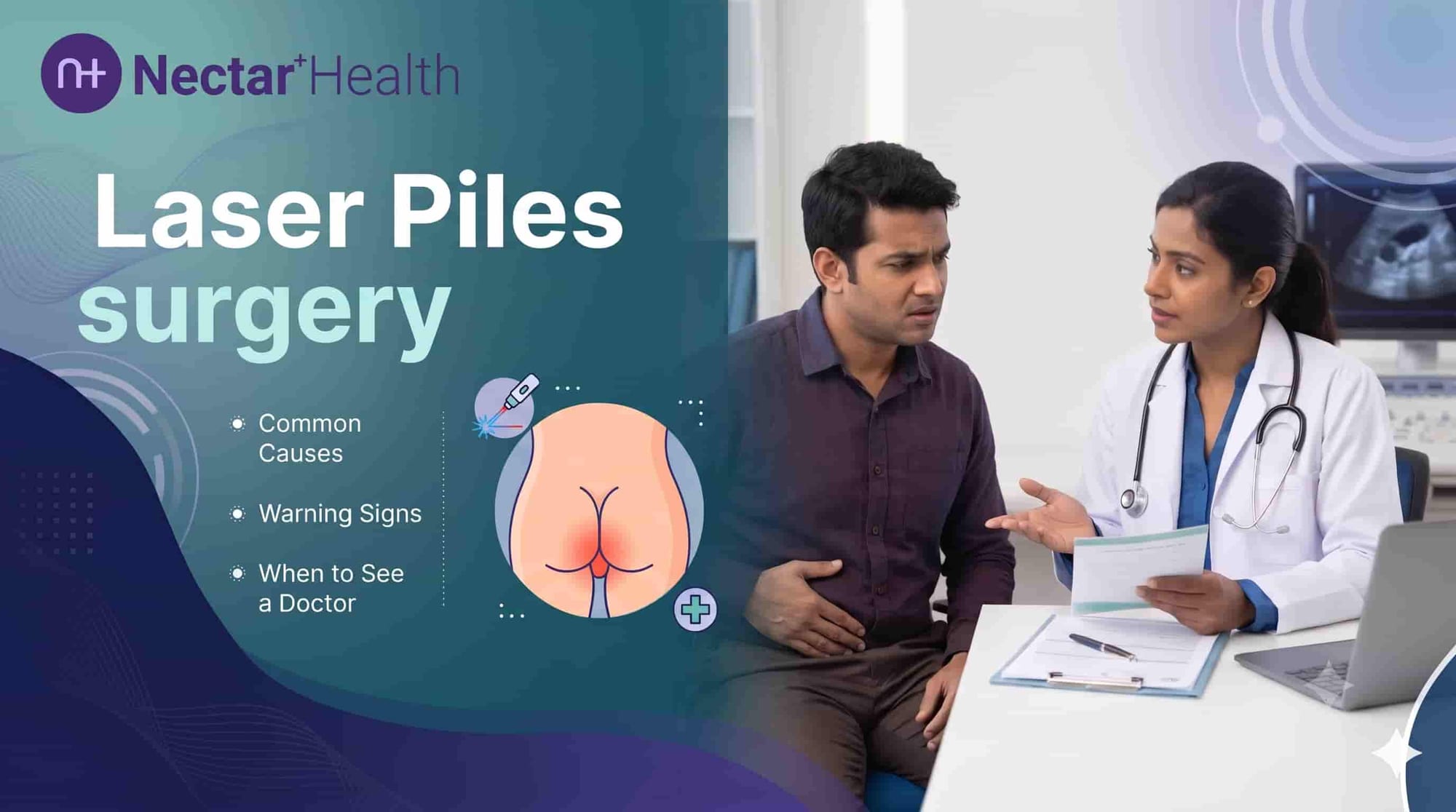
Deciding to pursue Laser Piles Surgery in Delhi is a significant step, and having the right information from the start matters. NectarPlus Health provides verified clinical guidance, direct access to experienced Laparoscopic Gastro Surgeons, and transparent cost information — so your decisions are based on facts, not approximations.
Clinically Accredited Centres
Every hospital in the NectarPlus network meets national accreditation standards for surgical care and patient safety — including sterile theatre protocols and post-operative monitoring.
Experienced Surgical Teams
The Laparoscopic Gastro Surgeons in our Delhi network have performed this procedure repeatedly, with outcomes that align with published clinical benchmarks.
Minimally Invasive Options
Where your anatomy and case profile allow, keyhole or laparoscopic approaches are preferred — less tissue disruption, shorter hospital stay, faster rehabilitation.
Pre-Op Evaluation Included
Every patient receives a structured pre-operative assessment covering imaging, blood work, and anesthesia fitness — before a final surgical plan is confirmed.
Structured Post-Op Support
Discharge doesn't mean the care ends. Physiotherapy, wound reviews, and follow-up appointments are part of the standard care package for patients recovering from Laser Piles Surgery.
When is Laser Piles Surgery Needed?
Surgery is rarely the first recommendation, and it shouldn't be. For Laser Piles Surgery, the standard approach starts with conservative management — targeted physiotherapy, oral medications, weight reduction where applicable, and activity modification. For a meaningful percentage of patients, this manages symptoms well enough to delay or avoid surgery entirely. But when conservative measures have been tried consistently over several months without adequate relief, and diagnostic imaging confirms structural damage that isn't going to resolve on its own, the conversation shifts. Your Laparoscopic Gastro Surgeon in Delhi will give you a frank assessment of where you stand — what non-surgical options have realistic upside, and at what point the structural findings make surgical correction the more medically sound path forward.
Symptoms of Laser Piles Surgery
Not every symptom announces itself loudly. Many people living with conditions requiring Laser Piles Surgery spend months attributing their pain to fatigue or overexertion before seeking a proper evaluation. Persistent aching that worsens with specific movements, visible swelling that recurs despite rest, and a noticeable decline in your ability to move freely — these are the patterns that matter. In Delhi, patients often arrive having tried home remedies and general pain relief for extended periods. By the time imaging is done, the structural picture is usually clearer than the symptom history suggests. A clinical examination, paired with your account of how the symptoms have evolved, gives your Laparoscopic Gastro Surgeon the full context they need to assess urgency.
Causes
Ask a Laparoscopic Gastro Surgeon what causes most cases requiring Laser Piles Surgery, and the answer is rarely simple. There's usually a combination at play — age-related cartilage loss working alongside a history of strain or repetitive movement patterns that weren't ergonomically sound. In younger patients, a past injury that healed improperly or a congenital structural quirk often sets the trajectory. What clinical teams in Delhi consistently find is that the biological picture — what the tissue looks like on imaging — doesn't always match the severity of what the patient reports feeling. Some patients present with advanced degeneration but manageable pain; others have significant discomfort with findings that look moderate. Both presentations matter and both inform the approach.
Diagnosis
Diagnosis for conditions requiring Laser Piles Surgery involves layering evidence from multiple sources rather than relying on a single test result. A detailed patient history — when symptoms began, how they've changed, what makes them better or worse — is as diagnostically relevant as any scan. Physical examination identifies functional limitations that imaging alone can't quantify. Advanced imaging, typically MRI or high-resolution CT, then maps the anatomical reality in detail. In Delhi, specialists treat the diagnostic phase as genuinely exploratory — not a formality before jumping to surgery, but a process that ensures the right procedure is being planned for the right reason.
Types of Laser Piles Surgery
Surgical approaches for Laser Piles Surgery have evolved considerably. The shift toward minimally invasive techniques over the past two decades has meaningfully changed recovery timelines for eligible patients — smaller incisions translate to less post-operative discomfort, lower infection exposure, and earlier mobilization. That said, not every case is suited to a minimally invasive approach. When tissue damage is extensive or anatomical complexity demands direct access, conventional surgery remains the safer clinical choice. In Delhi, patients are assessed individually — the approach chosen is the one that best balances technical precision with recovery safety for that specific patient.
Laser Piles Surgery Procedure
The day of Laser Piles Surgery follows a structured sequence that your clinical team has planned in advance. You'll arrive at the hospital before your scheduled slot; nursing staff will confirm your fast, place an intravenous line, and run through pre-operative checks. An anesthesiologist will speak with you directly before the procedure begins — explaining the type of anesthesia being used and what to expect coming out of it. In the operating theatre, the surgical team positions you, confirms sterility of the field, and the Laparoscopic Gastro Surgeon begins. The procedure itself — the part where surgical work is being done — typically takes between one and two hours, depending on complexity. Recovery room monitoring follows, then transfer to your ward. Most patients are surprised by how organized the experience feels once it's underway.
Benefits of Laser Piles Surgery
The clinical benefits of Laser Piles Surgery extend well beyond the immediate post-operative period. Most patients experience a marked reduction in pain within the first few weeks — often described as the most immediate and noticeable change. Restored mobility follows as the tissue heals and rehabilitation progresses. Long-term, the structural repair prevents the kind of compensatory movement patterns that, left unchecked, cause secondary problems in adjacent joints or muscle groups. Patients in Delhi who've been through the process often remark that the decision they delayed the longest ended up being the one that made the biggest difference to their daily independence.
⚠️ Possible Risks & Complications
The risk conversation around Laser Piles Surgery is one that surgical teams in Delhi take seriously. Most patients want specifics, not generalities. Wound infection is the most cited concern — it occurs in a small minority of cases and responds well to antibiotic treatment when caught early. Blood clots are a known post-operative risk in any procedure requiring immobility; standard prophylaxis — compression stockings, early mobilization, blood thinners in some cases — significantly reduces their likelihood. Anesthesia reactions are rare and are screened for during your pre-operative assessment. For the vast majority of patients, the risk-benefit calculation falls clearly in favour of surgery once conservative options have been exhausted.
Recovery After Laser Piles Surgery
3–7 days for light activities; 2–4 weeks for complete recovery.
90% success rate for Laser Piles Surgery
Approximately 90–95%
Laser Piles Surgery Cost in Delhi
Factors Affecting Cost
Government vs private facility
Senior surgeon vs junior
Metro cities cost more
General vs private room
Open vs Laparoscopic
Your policy coverage
Most health insurance plans cover Laser Piles Surgery. Contact us to check your eligibility.
Why Choose Us for Laser Piles Surgery?
Disease Diagnostics
Our expert surgeons perform a thorough diagnosis to identify the root cause and recommend the best treatment plan.
Instant & Emergency Cases
We prioritize urgent cases and provide immediate medical attention to critical patients.
Hassle-free Insurance
We handle all insurance paperwork and facilitate cashless treatment at network hospitals.
Post-Surgery Care
Comprehensive follow-up consultations and recovery assistance after your procedure.
Post-Operative Care
Diet & Lifestyle
Personalized diet plans for faster recovery
Recovery Follow-up
Scheduled check-ups with your surgeon
Free Cab Facility
Complimentary pick-up and drop for visits
24*7 Patient Support
Round-the-clock assistance via chat & call
Speak to our expert surgeon for Laser Piles Surgery
📞 Call 08069159999Best Laser Piles Surgery Doctors in Delhi

Frequently Asked Questions about Laser Piles Surgery
What Our Patients Say
















.png)


Dr. Amit Poddar
MS (General Surgery), FMAS (Laparoscopic Surgery)
References & Sources
- Guidelines — sages.org
Medical Disclaimer
The clinical information on Laser Piles Surgery in Delhi provided here has been reviewed by a qualified specialist and is intended for patient education only. It does not constitute medical advice, diagnosis, or a recommendation to pursue any specific treatment. Please consult a licensed physician before making healthcare decisions.


