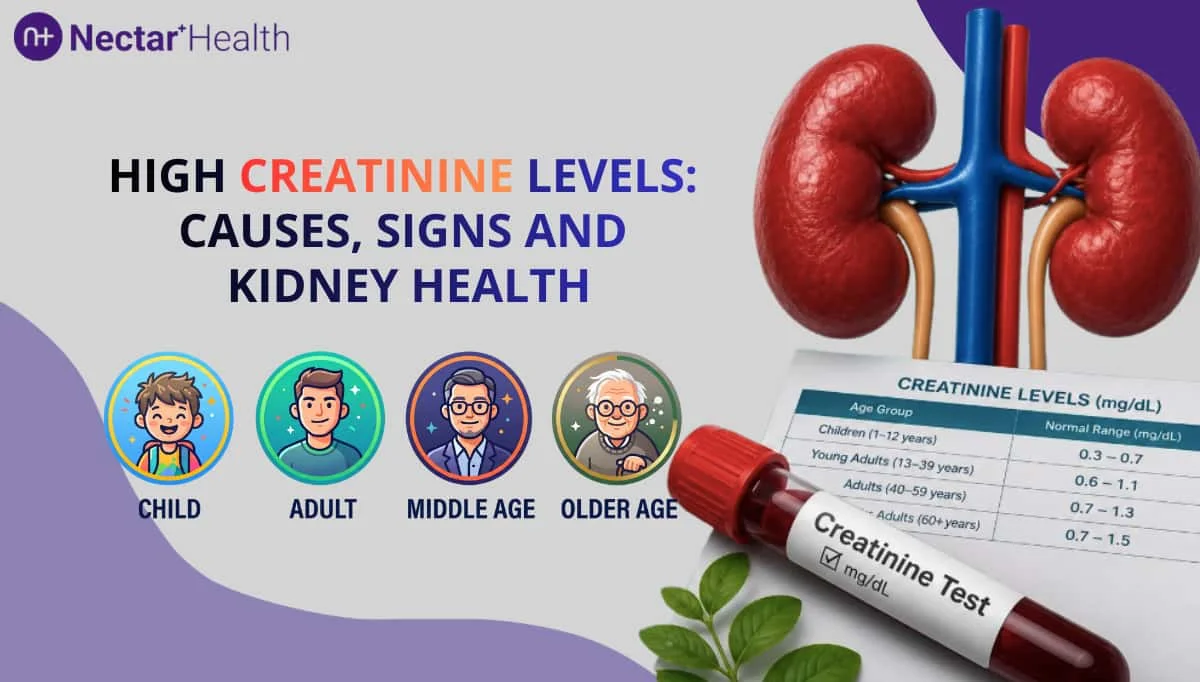
You open your blood test report and one line is marked in bold: creatinine 1.4 mg/dL. Is that serious? Do your kidneys need attention? Or is it just the effect of a hard gym session yesterday?
This guide to creatinine levels, normal range and kidney health answers those questions in plain language. You will learn what creatinine is, what the numbers mean for men, women, children and older adults, why a single result rarely tells the whole story, and what you can realistically do to protect your kidneys.
What Is Creatinine?
Creatinine is a waste product made by your muscles. When muscles use creatine, a compound that helps them produce energy, a small amount breaks down into creatinine every day. It then enters the blood, travels to the kidneys and leaves the body in urine.
A few things make it useful as a kidney marker:
- Your body produces it at a fairly steady rate, mostly depending on how much muscle you have.
- The kidneys filter it out of the blood.
- If the kidneys are not filtering well, creatinine builds up and the blood level rises.
That is why doctors use the creatinine blood test as a basic kidney function test. It is a helpful clue, but only a clue. Muscle mass, age, diet and hydration all nudge the number, so doctors read it alongside other results.
Normal Creatinine Levels
The commonly used adult creatinine normal range is:
- Men: about 0.7 to 1.3 mg/dL
- Women: about 0.6 to 1.1 mg/dL
Men usually have higher values because they tend to have more muscle mass. These are general reference ranges, not universal cut-offs for diagnosis. A value slightly outside the range is not automatically a disease, and a value inside the range does not guarantee healthy kidneys.
Creatinine Levels in Men, Women, Children and Older Adults
| Group | Approximate reference range (mg/dL) | Things to keep in mind |
|---|---|---|
| Adult men | 0.7 to 1.3 | Higher muscle mass can push values toward the upper end |
| Adult women | 0.6 to 1.1 | Usually lower than in men |
| Children (1 to 12 years) | About 0.3 to 0.7 | Rises gradually as the child grows and gains muscle |
| Teenagers | About 0.5 to 1.0 | Approaches adult values with puberty |
| Older adults | Often similar to adult ranges | Muscle loss can keep creatinine looking "normal" even when kidney filtration has dropped |
Some labs report in micromol/L instead of mg/dL. Multiply mg/dL by 88.4 to convert, so 1.0 mg/dL is about 88 micromol/L.
Why Ranges Differ Between Laboratories
Different labs use different testing methods and equipment, and they build reference ranges from the population they serve. So one report may list 0.6 to 1.2 and another 0.7 to 1.3. Always compare your result to the range printed on your report, and try to repeat tests at the same lab so numbers can be compared fairly.
What Does a High Creatinine Level Mean?
A high creatinine means the blood is carrying more of this waste product than expected. The reasons range from harmless and temporary to serious.
Common High Creatinine Causes
- Reduced kidney function: the most important cause, including chronic kidney disease (CKD)
- Acute kidney injury (AKI): a sudden drop in kidney function, for example during severe infection, major blood loss or after certain drugs
- Dehydration: from vomiting, diarrhoea, fever or too little fluid, especially in Indian summers
- Medicines: certain painkillers (NSAIDs such as diclofenac or ibuprofen), some antibiotics and other drugs can affect the kidneys or the creatinine reading
- Urinary tract obstruction: kidney stones or an enlarged prostate blocking urine flow
- Intense exercise or muscle injury: heavy weight training, crush injuries or muscle breakdown
- Diet and supplements: a very large meal of cooked meat or creatine supplements can raise the level temporarily
A High Result Is Not Always Permanent Kidney Damage
If the cause is dehydration, a medicine or a temporary stress on the body, creatinine often returns to normal once that cause is treated. This is why doctors usually repeat the test and look at the trend. Chronic kidney disease is diagnosed only when abnormalities last more than three months.
Here is a realistic example. A 28-year-old who lifts weights and uses a creatine supplement gets a result of 1.4 mg/dL after a heavy leg day. He feels fine, and his repeat test after a few days of rest and normal hydration, along with a urine test, may be completely normal. Compare that with a 55-year-old with long-standing diabetes and blood pressure whose creatinine has crept from 1.0 to 1.4 over two years. The number is the same, but the story is very different.
Symptoms of High Creatinine Levels
Here is something many people do not expect: high creatinine itself usually causes no symptoms. And early kidney disease is often silent. Symptoms usually appear only when kidney function has dropped significantly:
- Swelling in the feet, ankles or face
- Changes in urination, such as passing much more or much less urine, foamy urine, or getting up repeatedly at night
- Tiredness and weakness
- Nausea and vomiting
- Loss of appetite
- Shortness of breath
- Difficulty concentrating
These symptoms can have many other causes, so they are a reason to get tested, not a reason to assume kidney disease.
What Does a Low Creatinine Level Mean?
Low creatinine is usually less worrying than high creatinine. Common reasons include:
- Low muscle mass, for example in people who are very thin, frail or bedridden
- Ageing, because muscle gradually declines
- Pregnancy, when the kidneys filter more blood and creatinine normally falls
- Low-protein diets or malnutrition
- Some conditions, such as muscle-wasting diseases, advanced liver disease or fluid overload
If the result is low without an obvious reason such as pregnancy, or if it comes with unexplained weight loss or weakness, mention it to your doctor. One catch to remember: in people with very low muscle mass, a "normal" creatinine can hide reduced kidney function, so other tests become more important.
Creatinine Test: How Is It Done?
The serum creatinine test is a simple blood test. It is often done fasting or after a normal meal as per your doctor's advice, and results are usually ready the same day. But doctors rarely rely on creatinine alone. A proper kidney function test usually combines several measures.
| Test | What it shows | Typical reference |
|---|---|---|
| Serum creatinine | Waste level in blood | Men 0.7 to 1.3, women 0.6 to 1.1 mg/dL |
| eGFR (estimated glomerular filtration rate) | Estimated filtering capacity of the kidneys | 90 or above is considered normal |
| Blood urea nitrogen (BUN) | Another waste product, affected by hydration, diet and liver function | About 7 to 20 mg/dL |
| Urine albumin-to-creatinine ratio (uACR) | Protein leaking into urine, an early sign of kidney damage | Below 30 mg/g is normal |
| Urine creatinine | Used in specific situations, such as 24-hour urine collections or calculating ratios | Interpreted by the doctor |
Understanding the eGFR Test
The eGFR test is not a separate blood draw. Your lab calculates it from your serum creatinine, age and sex using a formula (most labs now use the CKD-EPI 2021 equation). It tells you roughly how many millilitres of blood your kidneys filter per minute.
A rough guide to eGFR categories:
- 90 or above: normal filtration (kidney disease is still possible if urine tests are abnormal)
- 60 to 89: mildly reduced, which can be normal with age if there is no other sign of damage
- 45 to 59: mildly to moderately reduced
- 30 to 44: moderately to severely reduced
- 15 to 29: severely reduced
- Below 15: kidney failure range
To see why age and sex matter, take a 45-year-old woman. A creatinine of 0.85 mg/dL gives an eGFR of about 86, while 1.40 mg/dL gives an eGFR of about 47. A 50-year-old man with a creatinine of 1.5 mg/dL has an eGFR of roughly 55. Same-looking numbers can mean different things for different people, which is exactly why eGFR is more informative than creatinine alone.
Why the Urine Test Matters
A person can have a normal eGFR but still have early kidney damage if albumin (a protein) is leaking into urine. A uACR persistently above 30 mg/g is a sign of this. That is why guidelines such as KDIGO classify kidney disease using both eGFR and urine albumin. For people with diabetes or high blood pressure, the uACR is often the earliest warning.
Your doctor may also order a urine routine test, an ultrasound of the kidneys and urinary tract, or a cystatin C test (an alternative marker useful when muscle mass is unusual).
How to Maintain Healthy Creatinine Levels
Let us be honest about what is realistic. There is no drink, herb or food that "flushes out" creatinine. What you can do is protect the kidneys, which keeps the number where it should be, or stops it from climbing.
- Stay adequately hydrated. Drink enough that your urine is pale yellow. Extra water beyond what your body needs will not lower creatinine, and people with heart or advanced kidney problems may need fluid limits set by their doctor.
- Keep blood pressure in check. High blood pressure is one of the leading causes of kidney damage. Take prescribed medicines regularly and monitor at home.
- Manage diabetes well. Regular HbA1c checks and good sugar control protect the tiny filters in the kidneys.
- Eat a balanced diet with plenty of vegetables, fruits, whole grains and pulses.
- Be careful with painkillers. Frequent use of NSAIDs and self-medication can harm the kidneys. Also be cautious with unregulated herbal or "detox" products, which may contain unlisted ingredients or heavy metals.
- Move regularly. Aim for about 150 minutes of moderate activity a week, as suggested by WHO.
- Limit salt. WHO advises under 5 grams of salt a day, roughly a teaspoon, including what is hidden in pickles, papad, namkeen and packaged foods.
- Avoid smoking and limit alcohol.
- Get checked regularly if you have diabetes, high blood pressure, heart disease, a family history of kidney disease, are over 60, or have had kidney stones. An annual creatinine, eGFR and uACR is a sensible starting point unless your doctor suggests otherwise.
If you use creatine or high-protein supplements for fitness, tell your doctor before a kidney test so the results can be interpreted correctly.
Foods and Diet for Kidney Health
If your kidneys are healthy, you do not need a special "kidney diet" or long lists of banned foods. Restricting foods without a medical reason can lead to nutrient gaps.
A kidney-friendly everyday plate looks like this:
- Mostly home-cooked meals with vegetables, fruits, dal, whole grains and moderate portions of protein (dairy, eggs, fish, chicken or plant proteins)
- Less processed and packaged food
- Less sugar-sweetened drinks
- Less salt
Sodium, Protein and Potassium: What Changes in Kidney Disease
- Sodium (salt): Everyone benefits from cutting back. It is especially important if you have high blood pressure, swelling or kidney disease.
- Protein: People with healthy kidneys do not need to restrict it, though very high-protein diets are not necessary either. In CKD, the right amount depends on the stage, and some people need less while others (for example, on dialysis) need more.
- Potassium: Healthy kidneys handle potassium well, and potassium-rich foods like bananas, potatoes, tomatoes and coconut water are fine. People with advanced kidney disease or high blood potassium may be asked to limit them.
If you have been told your creatinine or eGFR is abnormal, please speak to a nephrologist or renal dietitian before changing what you eat. Diets copied from social media or from another patient can do harm.
When Should You See a Doctor?
Consult a doctor if you have:
- A creatinine that stays above the reference range on repeat testing
- A low or falling eGFR (especially below 60)
- Protein or albumin in the urine
- Foamy urine or changes in how often you pass urine
- Persistent swelling or unexplained tiredness
- Diabetes or high blood pressure and have not had a kidney check in the past year
Seek urgent medical care for:
- Very little or no urine
- Severe breathlessness
- Confusion or unusual drowsiness
- Rapidly worsening swelling
- Severe vomiting with inability to drink fluids
Final Thoughts
Creatinine is a useful starting point, but the full picture comes from three things together: your creatinine, your eGFR and your urine albumin. Checking them regularly, especially if you have diabetes, high blood pressure or a family history of kidney disease, can catch problems early, when they are far easier to manage.
If your report shows an abnormal result, do not panic and do not self-treat. Repeat the test as advised, share your medicines and supplements with your doctor, and consult a doctor or nephrologist for a proper evaluation.
Related reading on NectarPlus.Health: [Kidney Function Test: Complete Guide], [Diabetes and Kidney Health], [High Blood Pressure: Causes and Control], [Kidney Stones: Symptoms and Prevention], [Healthy Diet for Indian Adults]
Sources and further reading: National Kidney Foundation (NKF) eGFR and CKD resources; National Institute of Diabetes and Digestive and Kidney Diseases (NIDDK); KDIGO Clinical Practice Guideline for CKD; World Health Organization (WHO) guidance on salt intake and physical activity.
Medical disclaimer: This article is for educational purposes only and does not replace professional medical advice, diagnosis or treatment. Reference ranges vary between laboratories. Please consult a qualified doctor or nephrologist to interpret your test results and do not start, stop or change any medicine, supplement or diet without medical guidance.