Most people with hepatitis B or C feel perfectly fine for years. That is exactly what makes these infections risky. Many people only find out when a routine blood test, a pre-surgery check-up or a blood donation turns up a surprise.
This guide covers Hepatitis B and C in plain language: how they spread, what the symptoms look like, which tests matter, and what treatment can (and cannot) do. If you have just received an abnormal report, or you are simply wondering whether you should get tested, you will find practical answers here.
What Is Hepatitis, and How Does It Affect the Liver?
Hepatitis simply means inflammation of the liver. Your liver filters blood, helps digest food, stores energy and makes proteins that clot your blood. When it is inflamed for a long time, it slowly loses the ability to do these jobs.
Hepatitis can be caused by alcohol, certain medicines, autoimmune conditions, fatty liver and several viruses. Of the five main hepatitis viruses (A, B, C, D and E), B and C are the most worrying because they can settle in as long-term infections and quietly damage the liver over decades.
Hepatitis B and Hepatitis C at a Glance
- Hepatitis B is caused by the hepatitis B virus (HBV). It can be prevented with a vaccine. In most cases it can be controlled with treatment, but not routinely cleared from the body.
- Hepatitis C is caused by the hepatitis C virus (HCV). There is no vaccine, but modern medicines can cure the infection in the large majority of people.
Both are mainly spread through blood, and both can be silent for a long time. The differences matter, and we will compare them side by side later in this article.
In India, an estimated 1 in about 118 people carries hepatitis B and roughly 1 in 345 carries hepatitis C, according to figures cited by the Government of India. These are national averages. Some communities and regions have higher rates.
How Hepatitis B and C Spread
Both viruses travel through infected blood or body fluids. Hepatitis B is also found in semen and vaginal fluids, which makes it far more infectious than hepatitis C, including through sex and from mother to baby.
Common Routes of Transmission
- Unsafe injections and reused syringes or needles, including in unregulated clinics
- Sharing needles for injecting drugs
- Unsterilised tattoo, piercing or acupuncture equipment
- Transfusion of unscreened blood or blood products (rare today where blood banks follow screening rules, but still a concern in some settings)
- Mother to child during childbirth, which is the most common route for hepatitis B in many high-prevalence regions
- Shared razors, toothbrushes or nail clippers that may carry traces of blood
- Unprotected sex, mainly for hepatitis B
- Needle-stick injuries among healthcare workers
Risks Worth Knowing in the Indian Context
A few everyday situations deserve attention. Roadside barbers who reuse blades without changing them, unlicensed practitioners who give injections, and tattoo or piercing studios that skip sterilisation all carry real risk. So do dialysis units and dental clinics that do not follow strict infection control. Before 1990s-era screening rules, many people were also exposed through transfusions, which is why older adults with unexplained liver problems are sometimes tested.
If you are choosing where to get an injection, shave, tattoo or dental work, ask whether the needle or blade is new and sealed. Asking is perfectly acceptable.
What Does Not Spread Hepatitis B or C?
This is where a lot of fear and stigma comes from, so it is worth being clear.
- Hugging, shaking hands, sharing a room: no
- Sharing meals, plates or glasses: no
- Coughing or sneezing: no
- Contaminated food or water: no. (That is how hepatitis A and E spread, which is a different matter.)
- Breastfeeding: generally considered safe, unless nipples are cracked and bleeding
- Kissing: hepatitis C does not spread this way, and the risk for hepatitis B is very low, especially if you are vaccinated
A person with hepatitis B or C can safely cook for the family, go to school or work, and share a home.
Symptoms of Hepatitis B and C
Here is the honest truth about Hepatitis B symptoms and Hepatitis C symptoms: many people have none at all.
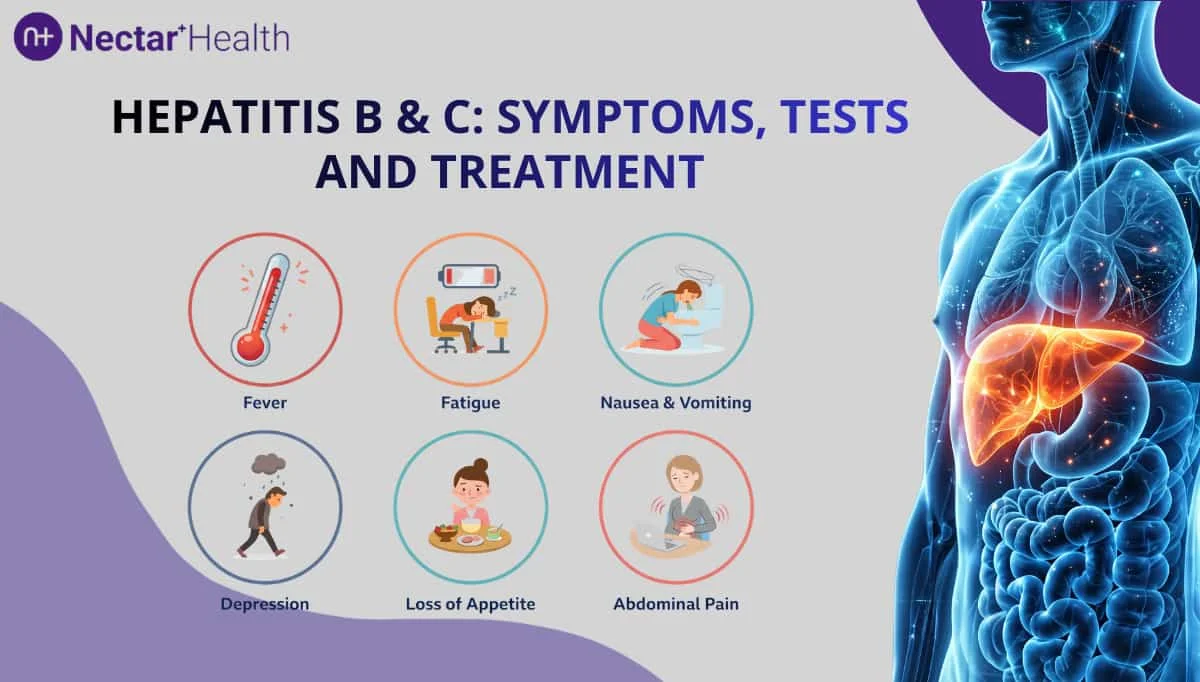
When symptoms do appear, they tend to be vague and easy to blame on something else:
- Tiredness that does not improve with rest
- Nausea or reduced appetite
- Discomfort or dull pain in the upper right abdomen
- Dark, tea-coloured urine
- Pale or clay-coloured stools
- Yellowing of the skin and eyes (jaundice)
- Joint aches
- Mild fever
Acute vs Chronic Infection
Acute hepatitis is the early phase, within the first six months after infection. Some people have noticeable symptoms like jaundice. Many do not.
Chronic hepatitis means the virus is still present after six months. This phase is often completely silent. Damage can build up slowly, and symptoms may only appear when the liver is already scarred.
What happens after infection differs between the two viruses:
- Hepatitis B: Most healthy adults clear the virus on their own. But infants and young children are very likely to develop chronic infection. This is why the newborn vaccine matters so much.
- Hepatitis C: Roughly a quarter of people clear it spontaneously. The majority, around 55 to 85 percent according to WHO, go on to develop chronic infection.
Hepatitis B vs Hepatitis C: Key Differences
Here is a quick comparison of Hepatitis B vs Hepatitis C.
| Feature | Hepatitis B | Hepatitis C |
|---|---|---|
| Virus type | DNA virus (HBV) | RNA virus (HCV) |
| Main spread | Blood, sexual contact, mother to child | Mainly blood (unsafe injections, shared needles, unscreened transfusions) |
| Sexual transmission | Yes, relatively common | Uncommon |
| Mother-to-child risk | Significant without preventive care | Lower |
| Symptoms | Often none; jaundice, fatigue, dark urine possible | Often none; fatigue and mild symptoms possible |
| Chronic infection risk | Very high in infants, low in healthy adults | High (around 55 to 85% of those infected) |
| Vaccine | Yes, safe and effective | No approved vaccine |
| Key tests | HBsAg, anti-HBc, anti-HBs, HBV DNA | Anti-HCV antibody, HCV RNA |
| Treatment | Antivirals to control the virus; often long term | Direct-acting antivirals (DAAs), usually 8 to 12 weeks |
| Outcome | Usually controlled, not routinely cured | Cure in the large majority |
| Liver cancer risk | Can occur even without cirrhosis | Mostly in people with advanced fibrosis or cirrhosis |
Hepatitis B and C Testing and Diagnosis
Because symptoms are unreliable, Hepatitis B and C testing is the only way to know. These are simple blood tests, and in India they are available free of cost at government facilities under the National Viral Hepatitis Control Programme (NVHCP).
The Hepatitis B Blood Panel
Doctors usually look at three markers together:
- HBsAg (surface antigen): A positive result means the virus is currently in your body. This is the main screening test.
- Anti-HBc (core antibody): Shows past or present exposure. The IgM type points to a recent infection.
- Anti-HBs (surface antibody): A positive result usually means you are immune, either from vaccination or from clearing a past infection.
If HBsAg is positive, further tests such as HBeAg and HBV DNA (viral load) help the doctor judge how active the infection is.
The Hepatitis C Blood Panel
Hepatitis C diagnosis is a two-step process:
- Anti-HCV antibody test: A screening test showing you have been exposed at some point.
- HCV RNA test: Confirms whether the virus is currently active. A positive antibody with a negative RNA result usually means the body cleared the infection earlier.
This second step matters. A positive antibody test alone does not mean you need treatment.
Other Tests Your Doctor May Order
- Liver function tests (ALT, AST, bilirubin, albumin) to see how the liver is coping. These can be normal even in chronic infection.
- Platelet count and INR, which can hint at advanced liver disease
- Ultrasound of the abdomen
- FibroScan (elastography) or blood-based scores to estimate scarring
- HIV and other infection screening, since these infections can share risk factors
Who Should Get Tested?
Consider testing if you:
- Have never been screened and are an adult. Many guidelines now support at least one lifetime test.
- Had surgery, dental procedures, transfusions or injections in settings with doubtful hygiene
- Have had a tattoo, piercing or shave with shared equipment
- Have a family member, partner or household contact with hepatitis B or C
- Are a healthcare worker or have had a needle-stick injury
- Are on dialysis or have HIV
- Are pregnant (see below)
- Have unexplained abnormal liver tests, persistent fatigue or jaundice
Treatment Options for Hepatitis B and C
Treatment is decided after a proper medical evaluation. Please do not start or stop any antiviral on your own, or based on what a friend took.
Hepatitis B Treatment
Not everyone with chronic hepatitis B needs medicines right away. Some people only need regular monitoring, with blood tests and liver scans every few months to a year. A specialist decides when to start based on viral load, liver enzyme levels, the degree of liver scarring, age and family history of liver cancer.
When treatment is needed, it usually involves oral antiviral tablets that keep the virus suppressed. A few important points about Hepatitis B treatment:
- It can control the virus and greatly lower the risk of cirrhosis and liver cancer.
- It does not routinely eliminate the virus, so many people need long-term therapy.
- Stopping medicines without medical advice can cause a dangerous flare-up.
- People on chemotherapy or immunosuppressant drugs may need screening and preventive treatment, because dormant hepatitis B can reactivate.
Hepatitis C Treatment
The news here is genuinely encouraging. Hepatitis C treatment with direct-acting antivirals (DAAs) cures the infection in the large majority of people. Cure is measured by a blood test (called SVR12) done about 12 weeks after the course ends, showing no virus.
- Treatment is typically 8 to 12 weeks of tablets, occasionally longer for people with cirrhosis or previous treatment
- Side effects are generally mild
- Doctors check for hepatitis B and HIV before starting, because treating hepatitis C can trigger hepatitis B flares in co-infected people
- A cure does not give lifelong immunity. Reinfection is possible if exposure continues.
Access in India
Since 2018, the NVHCP has provided free testing and treatment for hepatitis B and C at government facilities, including district hospitals. Ask your nearest government hospital or a gastroenterologist or hepatologist about enrolment.
Prevention and Safety Measures
Get the Hepatitis B Vaccine
The Hepatitis B vaccine is safe, effective and one of the best protections you can have against liver cancer.
- Newborns: The first dose should be given within 24 hours of birth, followed by doses at 6, 10 and 14 weeks under India's universal immunisation schedule.
- Adults who were never vaccinated: Usually a three-dose course. Check your anti-HBs level if you are unsure about immunity.
- Higher-priority groups: Healthcare workers, household contacts of infected people, people on dialysis, and people with chronic liver disease.
There is no approved vaccine for hepatitis C. Prevention depends on avoiding exposure.
Everyday Safety Habits
- Insist on new, sealed, single-use needles and syringes for every injection
- Use blood only from licensed, screened blood banks
- Do not share razors, toothbrushes, nail clippers or needles
- Choose licensed tattoo and piercing studios that sterilise equipment
- Use condoms if you have multiple partners or a partner with unknown hepatitis B status
- Cover cuts and clean up blood spills with a freshly made bleach solution and gloves
Protecting Babies During Pregnancy
Every pregnant woman should be tested for hepatitis B (and ideally hepatitis C) during antenatal care. If the mother has hepatitis B:
- The baby should get the birth-dose vaccine within 24 hours, and, when recommended, hepatitis B immunoglobulin (HBIG) as well
- Some mothers with a high viral load may be advised antiviral medicine in the last trimester
- With these steps, mother-to-child transmission can be dramatically reduced
For hepatitis C, treatment is generally given after delivery and after breastfeeding decisions are discussed with the doctor. The baby can be tested at a later age to see if infection occurred.
Possible Complications
Most people with chronic hepatitis never develop severe problems, especially with monitoring and treatment. But when infection is ignored for years, the liver can progress through these stages:
- Chronic inflammation, which may continue silently
- Fibrosis, where scar tissue begins replacing healthy liver tissue
- Cirrhosis, advanced scarring that disturbs liver function
- Liver failure, when the liver can no longer keep up
- Liver cancer (hepatocellular carcinoma), which is a particular concern in chronic hepatitis B and in hepatitis C with cirrhosis
This is why early diagnosis and follow-up matter. People with cirrhosis, and some with chronic hepatitis B, are usually advised an ultrasound roughly every six months to catch liver cancer early, when it is far more treatable.
When Should You See a Doctor?
Book an appointment if you notice:
- Fatigue that lingers for weeks
- Yellow skin or eyes
- Dark urine or pale stools
- Ongoing discomfort in the upper right abdomen
- Unexplained loss of appetite or weight
- Known exposure to someone else's blood, such as a needle-stick injury or a high-risk procedure. Early medical advice can include preventive vaccination.
Seek urgent medical attention if there is:
- Vomiting blood or black, tarry stools
- Severe abdominal pain or swelling of the belly
- Confusion, extreme drowsiness or unusual behaviour
- Rapidly worsening jaundice
- Fever with jaundice
These can signal serious liver complications and should not wait.
Final Thoughts
Hepatitis B and C are common, often silent and, in the long run, serious. But they are also among the most manageable liver infections we know about. A simple blood test can find them early, hepatitis C can usually be cured, hepatitis B can be kept under control, and the hepatitis B vaccine can prevent infection in the first place.
If you have never been tested, consider doing it this month. If your child or you are not vaccinated, ask your doctor about it. And if you already live with hepatitis B or C, regular liver check-ups are your best protection.
Related reading on NectarPlus.Health: [Liver Function Tests Explained], [Fatty Liver Disease: Causes and Reversal], [Understanding Jaundice in Adults and Children], [Adult Vaccination Guide for India], [Healthy Pregnancy: Essential Antenatal Tests]
Sources and further reading: World Health Organization (WHO) hepatitis B and C fact sheets and guidelines; US Centers for Disease Control and Prevention (CDC) viral hepatitis resources; National Viral Hepatitis Control Programme (NVHCP), Ministry of Health and Family Welfare, Government of India.
Medical disclaimer: This article is for general education and does not replace professional medical advice, diagnosis or treatment. Please consult a qualified healthcare professional, such as a physician, gastroenterologist or hepatologist, about your own situation. Do not start, change or stop any medicine without medical supervision.