What Happens to Blood Sugar After You Eat?
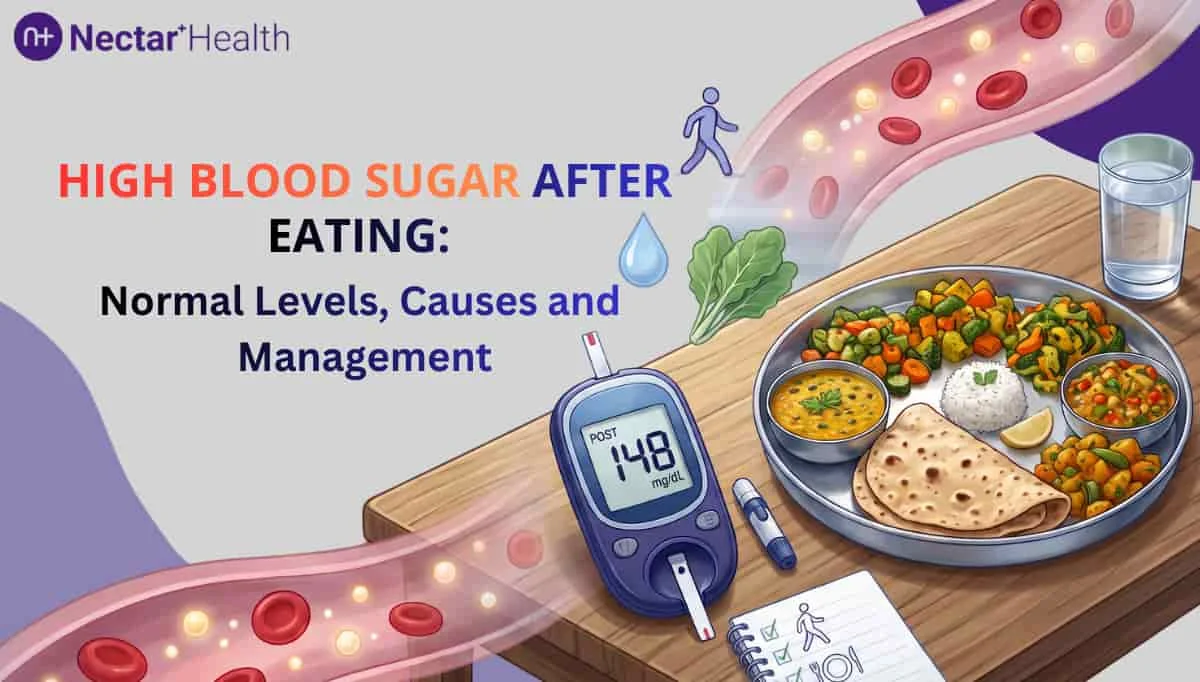
Every time you eat, your blood sugar goes up. That is normal. Your body breaks down the carbohydrates in food (roti, rice, fruit, dal, even milk) into glucose, which enters the blood. The pancreas then releases insulin, the hormone that helps glucose move into your cells for energy. In a healthy body, sugar peaks within an hour or so and then comes back down.
Key terms in simple words
- Postprandial blood sugar is simply your blood sugar after a meal. ("Postprandial" means "after eating".) You may also see it written as PPBS or PP sugar on lab reports.
- Postprandial hyperglycemia means the sugar after a meal goes higher than it should, or stays high for too long.
A normal rise vs consistently high blood sugar after meals
A modest, short-lived rise after eating is expected, even in people without diabetes. What matters is the pattern:
- Normal: sugar rises, peaks, and settles back towards your usual level within a couple of hours.
- A concern: sugar climbs much higher, stays up for hours, or is high after most meals.
A single high reading after a heavy festival meal does not mean you have a problem. Repeated high readings do deserve attention. They can be an early sign of insulin resistance or diabetes, and in people already diagnosed they show that the current plan may need adjusting by their doctor. Researchers note that spikes after meals can contribute to the risk of complications in type 2 diabetes [4].
Common Causes of High Blood Sugar After Meals
Usually it is a mix of what is on your plate and how well your body handles sugar.
What and how you eat
- Refined carbohydrates and sugary foods. White rice, maida, sweets and sugary drinks are digested quickly, so glucose enters the blood fast.
- Large portions and heavy carbohydrate loads. The more carbohydrate in one sitting, the higher the rise, especially when the meal has little protein, fibre or vegetables.
- Irregular or unbalanced meals. Skipping meals and then eating a huge one, or eating mostly carbohydrate (say, only poha or only paratha with chai), can lead to bigger spikes.
- Sitting still after eating. Muscles use up glucose when you move, so a long sit after a meal lets sugar stay higher for longer [5].
What is happening inside the body
- Insulin resistance. The cells respond poorly to insulin, so sugar stays in the blood. This is the main problem in type 2 diabetes and prediabetes. Indians tend to develop insulin resistance at lower body weights, a pattern ICMR calls the "Asian Indian phenotype" [8].
- Not enough insulin. When the pancreas can't make enough insulin, or can't make it quickly enough after a meal, sugar rises. This happens in type 1 diabetes and in long-standing type 2 diabetes.
Other triggers
- Stress, poor sleep and illness. These raise hormones such as cortisol and adrenaline, which push blood sugar up. Infections can do the same.
- Certain medicines. Steroids are a well-known example, and some other drugs can also raise glucose. Never stop a prescribed medicine on your own. Speak to your doctor instead.
- Medication timing or effectiveness. If diabetes medicines or insulin are taken at the wrong time relative to meals, missed, or no longer enough for your body, post-meal sugars can run high. Your doctor can review the type, dose and timing. Please don't adjust doses yourself.
Symptoms of High Blood Sugar After Eating
When sugar stays high, the body tries to flush it out through urine, which draws water out of your system. That is behind many of the classic symptoms:
- Increased thirst and a dry mouth
- Frequent urination, sometimes at night
- Tiredness, or feeling drained or sleepy after meals
- Blurred vision
- Headaches
- Trouble concentrating ("brain fog")
- Increased hunger, even soon after eating
Why symptoms are not a reliable guide
Mild or moderate post-meal spikes often cause no symptoms at all, and many people feel fine while their sugar runs high for years. Also, these symptoms are not specific to diabetes. Tiredness, headaches and poor focus have many other causes. So don't use how you feel to judge your sugar. Testing is the only reliable way to know.
Normal Blood Sugar After Eating: What Is the Healthy Range?
There is a catch that most blood sugar charts online skip: there are two different things people call a "post-meal range". One is a treatment target for people already diagnosed with diabetes. The other is what people without diabetes typically see. They should not be mixed up.
Post-meal targets for adults with diabetes
The American Diabetes Association (ADA) says that for many non-pregnant adults with diabetes, the peak post-meal glucose target is below 180 mg/dL, measured 1–2 hours after the start of the meal [1] [2]. This is a goal for managing diabetes. It is not the normal range for someone without diabetes.
| When you check | People without diabetes (typical, informal) | Adults with diabetes (general ADA target) |
|---|---|---|
| Before a meal (fasting or pre-meal) | Fasting below 100 mg/dL is considered normal | 80–130 mg/dL |
| 1 hour after the start of a meal | Usually near the peak. No official cut-off for ordinary meals | Peak below 180 mg/dL |
| 2 hours after the start of a meal | Many healthy people are back below about 140 mg/dL. This is a rule of thumb, not an official limit | Below 180 mg/dL |
| Other general target | None for ordinary meals | HbA1c below 7% for many adults, if it can be reached safely |
How to read these numbers
- Targets are individual. Your doctor may set a different goal based on your age, other health conditions, risk of low blood sugar and the medicines you take. ADA itself says goals may be more or less strict for different people [1].
- Guidelines differ. For example, one review of guidelines lists ADA at below 180 mg/dL, IDF 2014 and RSSDI 2017 at below 160 mg/dL, and ICMR 2018 at 120–140 mg/dL for the 2-hour value [4]. Follow the number your own doctor gives you.
- Pregnancy is different. Targets are tighter in pregnancy, including gestational diabetes. Ask your obstetrician or diabetes team for your numbers.
- A meal reading is not a diagnosis. The standard 2-hour oral glucose tolerance test (OGTT) is a separate, controlled test: you drink 75 g of glucose after fasting, and your sugar is checked two hours later. A result of 140–199 mg/dL suggests prediabetes and 200 mg/dL or more suggests diabetes [3]. An ordinary meal has a different carbohydrate load, so you cannot compare a home reading after dinner with these cut-offs.
Foods That Can Spike Blood Sugar After Meals
No single food is "forbidden", and none is the sole culprit. Still, some everyday Indian foods tend to raise sugar quickly, especially when eaten in big portions or on their own:
- White rice and maida (refined flour): think large plates of rice, naan, bhature, white bread, noodles
- Bread and bakery items: pav, biscuits, cakes, puffs, rusks
- Sugary drinks and packaged juices: cold drinks, sweetened lassi, "fruit" drinks, energy drinks. The ICMR-NIN guidelines say fruit juices and cold drinks with added sugar are best avoided [7]
- Sweets, desserts and mithai: gulab jamun, jalebi, halwa, kheer
- Large portions of potatoes: aloo parathas, fries, chaat, potato curries with a lot of rice or roti
- Highly processed snacks: namkeen, chips, instant noodles, many packaged snacks
- Sweetened tea and coffee: several cups a day with sugar can add up quickly
It is not just the food, it is the whole meal
How high your sugar goes depends on several things working together:
- How much carbohydrate you eat in one sitting
- Portion size
- How the food is prepared. Fine flour, overcooked or mashed foods, and sweetened or deep-fried preparations tend to act faster than whole, minimally processed versions
- What else is on the plate. Eaten with dal, vegetables, curd or other protein and fibre, the same rice or roti usually causes a gentler rise than when eaten alone
- Your own body. Two people can react quite differently to the same meal
How to Control High Blood Sugar After Meals
Small, repeatable changes work better than strict plans you can't keep up. Here is what usually helps.
- Watch your carbohydrate portions. Carbs are not the enemy, but quantity matters. A smaller serving of rice or roti often brings the biggest improvement.
- Pair carbs with protein, fibre and healthy fats. Dal, curd, paneer, eggs, fish, nuts and vegetables slow the rise.
- Add vegetables and salad to every meal. The ICMR-NIN guidelines suggest at least 500 g of vegetables and fruit a day [7].
- Choose whole grains and pulses more often. Whole wheat, jowar, bajra, ragi, chana, rajma and dal have more fibre than refined options.
- Cut sugary drinks. Swap them for water, plain chaas or unsweetened tea.
- Eat balanced meals at regular times. Avoid long gaps followed by very large meals.
- Take a short walk after meals, if you are physically able (more in the exercise section).
- Monitor your sugar the way your doctor advises.
- Take your medicines as prescribed, at the right times. If your readings stay high, talk to your doctor instead of changing doses yourself.
- Protect your sleep and manage stress. Aim for regular sleep, and find something that helps you unwind, such as walking, yoga or time with family.
Example meals (just ideas, not a prescription)
What works varies from person to person, so treat these as starting points to discuss with a doctor or dietitian.
- Breakfast: moong dal chilla with mint chutney and a side of curd, or vegetable upma with a boiled egg, instead of white bread with jam
- Lunch: 1–2 whole wheat rotis or a modest serving of rice, a bowl of dal, a large serving of sabzi, salad and curd
- Evening snack: roasted chana, a small handful of nuts or a fruit, instead of biscuits and sweetened chai
- Dinner: grilled fish or paneer, sauteed vegetables, a small portion of roti or millet, and a short walk afterwards
The ICMR-NIN guidelines also suggest combining cereals with pulses (around a 3:1 ratio) to improve the quality of a meal's protein [7].
Best Indian Foods for Better Post-Meal Blood Sugar Control
The aim is not to give up Indian food. It is to build plates where fibre and protein share the space with carbohydrate. Good options include:
- Whole wheat roti and other minimally processed grains: jowar, bajra, ragi, oats, daliya, and brown or parboiled rice in a sensible portion
- Dal, chana, rajma, chole and other pulses: they bring protein and fibre together
- Green leafy vegetables: palak, methi, sarson, amaranth
- Non-starchy vegetables: cucumber, carrots, tomato, cabbage, cauliflower, beans, bhindi, lauki, tori
- Protein foods: eggs, fish, chicken, paneer, tofu, soya chunks. Choose grilled, baked or lightly cooked over deep-fried
- Unsweetened curd or chaas: good with meals, without added sugar
- Whole fruits in appropriate portions: one fruit at a time, such as an apple, guava, orange, papaya or a small bowl of berries, rather than juice
- Nuts and seeds in small handfuls: almonds, walnuts, peanuts, flaxseeds
Balanced plate idea
- About half the plate non-starchy vegetables or salad
- About a quarter protein (dal, egg, fish, paneer, curd)
- About a quarter grains or other starchy food (roti, rice, millets)
Do you need to avoid carbohydrates completely?
Usually, no. Your body and brain need carbohydrates, and cutting out entire food groups is hard to sustain and can cause other problems. For many people, the better approach is right-sizing portions, choosing higher-fibre carbs and balancing them with protein and vegetables. The ICMR-NIN guidelines specifically caution against indiscriminate dieting and against protein supplements for building muscle [7]. If you take insulin or other diabetes medicines, changing how much carbohydrate you eat can affect your dose needs, so talk to your doctor or a dietitian first.
Exercise and Physical Activity After Meals
When you move, your muscles take up glucose from the blood, and regular activity makes your cells respond better to insulin. That is why exercise helps both right after a meal and over the long term.
Walking after meals
A 2022 review of seven studies (Sports Medicine) found that light walking for just 2–5 minutes after eating lowered blood sugar and insulin compared with sitting, and made the rise and fall of glucose more gradual. Standing helped a little, but walking helped more. The authors suggest moving within about 60–90 minutes of eating, before the sugar peak [5]. A relaxed 10–15 minute walk after meals is a sensible, easy-to-keep habit, though these were short studies and it works best alongside balanced meals.
Other activities worth trying
- Cycling and swimming: good aerobic exercise, kind to the joints
- Strength training: bodyweight exercises, resistance bands or weights build muscle, which uses glucose
- Yoga and stretching: helpful for stress and flexibility, alongside aerobic activity
Realistic weekly goals
A common goal for adults is about 150 minutes of moderate activity a week (for example, 30 minutes on five days) plus two sessions of muscle-strengthening. If that feels like a lot, begin with 10-minute walks and build up.
Precautions
- If you take insulin or medicines that can cause low blood sugar, ask your doctor about timing exercise and carrying a fast-acting sugar source.
- If you have heart disease, nerve damage in the feet, eye problems from diabetes (retinopathy) or kidney disease, get medical advice about which activities are safe.
- Stop and seek help if you feel chest pain, dizziness, severe breathlessness or signs of low sugar (sweating, shakiness, confusion).
How to Monitor Blood Sugar After Eating
Using a glucometer correctly
- Wash your hands with soap and water and dry them well. Sugar or food on your fingers can give a falsely high reading.
- Insert a fresh test strip (check the expiry date and that it matches your meter).
- Prick the side of your fingertip, then apply the drop of blood to the strip.
- Note the reading, the time, and what you ate.
- Dispose of the lancet safely, and store strips as the maker advises.
If your readings look odd, ask your doctor or diabetes educator to check your technique, or compare your meter with a lab test.
Why timing matters
Post-meal sugar is checked 1–2 hours after the start of the meal, not after you finish eating. This is when readings typically peak in people with diabetes [1]. Checking too early or too late can make the reading look better or worse than the true peak. Your doctor may ask you to check at a specific time, such as exactly 2 hours after the first bite.
Keep a blood sugar log
Write down the date, time, reading, what you ate (and roughly how much), any walk or exercise, medicines taken and how you felt. After a week or two, patterns often show up, for instance: "sugar is always highest after rice at dinner". Bring the log, or the meter, to your appointments.
What about continuous glucose monitors (CGM)?
A CGM is a small sensor worn on the body that reads glucose continuously. For some people with diabetes it shows trends that fingerpricks can miss, such as spikes after specific foods or overnight changes. ADA guidance uses CGM measures like time in range, with a common goal of spending more than 70% of the time between 70 and 180 mg/dL [2]. CGM is not needed or suitable for everyone, so ask your doctor whether it makes sense for you.
One high reading is not a diagnosis
A single high number can come from a large or sugary meal, stress, illness, poor sleep, a dirty finger or a faulty strip. Diabetes is diagnosed with laboratory tests (fasting glucose, HbA1c or OGTT), not home meter readings alone [3]. Repeat the check, note the circumstances and talk to your doctor if high readings keep appearing.
When Should You See a Doctor?
Make an appointment if you notice:
- Repeatedly high post-meal readings, or readings above the target your doctor gave you
- Persistent thirst and frequent urination
- Unexplained weight loss
- Blurred vision or unusual tiredness
- High fasting glucose or HbA1c on a lab report
- Poor control despite following your plan, including your diet, exercise and medicines
If you have never been tested but have risk factors (family history of diabetes, belly fat, PCOS, past gestational diabetes, high blood pressure), ask for a fasting glucose or HbA1c test.
Emergency warning signs: get help urgently
Very high blood sugar can lead to diabetic ketoacidosis (DKA) or other serious conditions. Go to the nearest hospital emergency department, or call 112, if high sugar comes with any of these [6]:
- Repeated vomiting, especially if you can't keep fluids down
- Stomach (abdominal) pain
- Fast, deep or difficult breathing
- Fruity-smelling breath
- Confusion, extreme drowsiness or fainting
- Signs of severe dehydration, such as a very dry mouth, little or no urine, dizziness or a racing heartbeat
People with type 1 diabetes, those on insulin, and those who are unwell should be especially careful. Don't wait for a routine appointment.
Conclusion: Managing High Blood Sugar After Meals
Some rise in blood sugar after eating is normal. What deserves attention is high blood sugar after meals that happens again and again. The most useful steps are practical ones: portion your carbohydrates, build plates with dal, vegetables and protein, cut sugary drinks, take a short walk after meals, and check your sugar at the right time.
Know which number applies to you. The ADA's below-180 mg/dL post-meal goal is for adults with diabetes, not a standard for everyone, and a home reading is not a diagnosis. If your readings stay high, or you have symptoms, speak to a doctor about testing and a plan that suits you.
Medical Disclaimer
This article is for general information and education only and is not a substitute for professional medical advice, diagnosis or treatment. Blood sugar targets vary with age, pregnancy, other medical conditions and medicines, and only a qualified doctor can diagnose diabetes or set your goals. Never change your medicine or insulin doses, or stop prescribed treatment, without medical supervision. If you have symptoms of severe high blood sugar, seek emergency medical care.