What Is Low Blood Sugar?
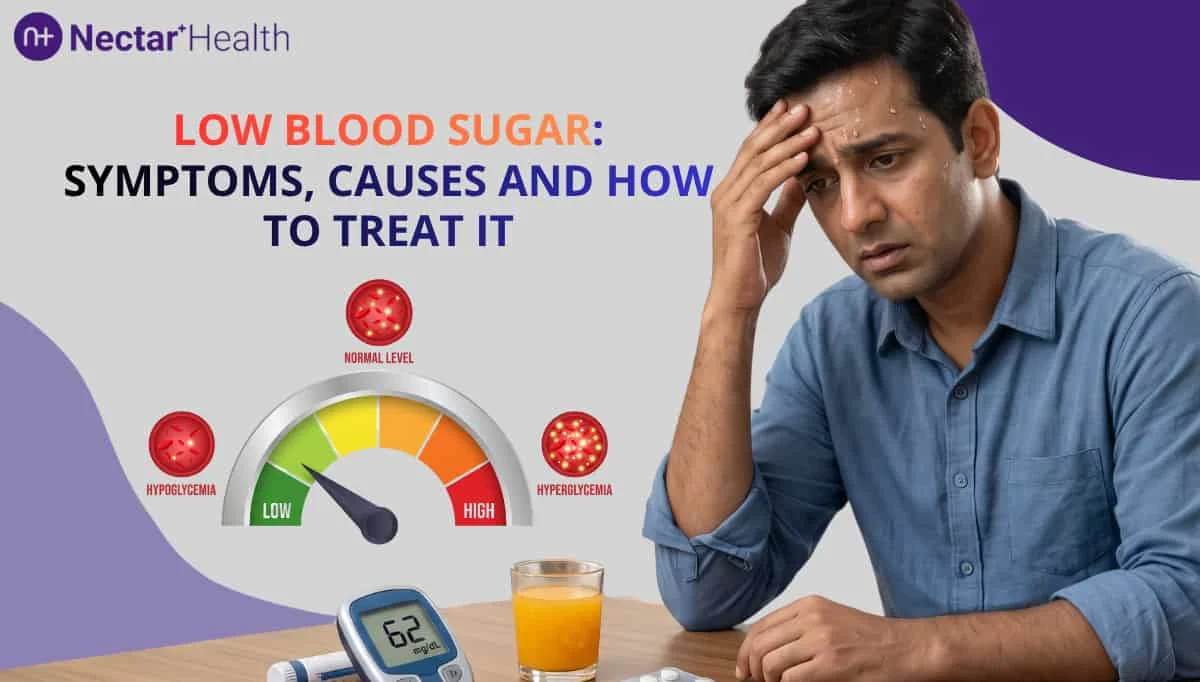
Low blood sugar, medically called hypoglycemia, happens when the glucose in your blood drops lower than your body needs. Glucose is the main fuel for your body. Your brain is especially dependent on it, because it cannot store much energy of its own.
When glucose falls too low, the brain and body start to struggle. You may feel shaky, sweaty and hungry at first. If it keeps falling, you may become confused, and in serious cases you can have a seizure or pass out.
Low blood sugar is most common in people with diabetes who take insulin or certain tablets that lower glucose. But it is not limited to them. People without diabetes can also have it, though this is much less common.
The good news is that most episodes are easy to treat if you spot them early. That is why knowing the signs matters, for you and for the people around you. This guide covers low blood sugar symptoms, hypoglycemia causes, first aid and prevention in simple language. [1][2]
Who is more likely to have low blood sugar?
- People with diabetes who use insulin
- People taking sulfonylureas (a group of diabetes tablets, such as glimepiride or gliclazide)
- Older adults, especially those who eat irregularly or have kidney problems
- People with liver, kidney or hormonal conditions
- People who drink alcohol heavily or on an empty stomach
Common Symptoms of Low Blood Sugar
Symptoms can come on quickly, sometimes within minutes. Here are the early warning signs.
Early warning signs
- Sudden sweating, often with cold, clammy skin
- Shaking or trembling hands
- Dizziness or feeling lightheaded
- Sudden, strong hunger
- Fast or pounding heartbeat
- Headache
- Weakness or tiredness
- Irritability, anxiety or feeling "on edge"
A common example: a person with diabetes skips lunch after taking their morning medicine, and by mid-afternoon they feel shaky, sweaty and short-tempered. That is a classic early hypoglycemia pattern.
Severe symptoms
If blood sugar keeps falling, the brain is affected more. Watch for:
- Confusion or unusual behaviour (for example, acting drunk or being unusually aggressive)
- Difficulty speaking or concentrating
- Blurred vision
- Seizures
- Loss of consciousness
Symptoms differ from person to person
Not everyone feels the same warning signs. Some people have very few symptoms. Over time, repeated lows can make the body stop giving clear warnings. This is called hypoglycemia unawareness, and it is risky because the person may not realise they need to act. Some medicines, such as beta-blockers, can also mask signs like a fast heartbeat or shaking. If this sounds like you, speak to your doctor. [1][2]
Low Blood Glucose Levels: Understanding the Range
The table below shows how doctors classify hypoglycemia. These levels are based on international guidance from the American Diabetes Association. [3]
| Category | Blood glucose level | What it means |
|---|---|---|
| Normal (fasting, without diabetes) | Roughly 70–99 mg/dL | Usual healthy range |
| Level 1 (mild) | Below 70 but at least 54 mg/dL | Alert value. Treat promptly. |
| Level 2 (moderate) | Below 54 mg/dL | Clinically significant. Needs immediate treatment. |
| Level 3 (severe) | No fixed number | Person needs help from another person to recover, regardless of the reading |
Why 70 mg/dL matters: For people with diabetes on glucose-lowering medication, 70 mg/dL is the alert threshold. At or below this level, you should treat the low and not wait for symptoms to get worse. Targets can differ from person to person, so follow your own doctor's advice.
So, to answer a common search question: yes, a reading of 60 mg/dL is considered low and should be treated right away, even though it is not yet in the Level 2 range.
Common Causes of Low Blood Sugar
Your blood sugar depends on a balance between food, physical activity and medication. When that balance tips, glucose can fall. Here are the main hypoglycemia causes.
- Skipping meals or eating too little. Less food means less glucose entering your blood, especially if you have already taken your medicine.
- Delaying meals. Taking medicine at the usual time but eating late is a very common trigger.
- Too much physical activity. Exercise uses up glucose, and the effect can last for hours afterwards. An unplanned long walk or workout without extra food can cause a low.
- Taking more insulin than needed. This includes dosing errors or taking a dose and then not eating.
- Certain diabetes medicines. Insulin and sulfonylureas carry the highest risk. Other tablets, such as metformin, rarely cause lows on their own.
- Alcohol, especially without food. Alcohol stops the liver from releasing stored glucose. This can cause a low several hours later, even overnight.
- Vomiting, diarrhoea or illness. You may not be able to eat or absorb food, but your medicine is still working.
- Liver, kidney or hormonal disorders. Examples include severe liver disease, kidney failure, and conditions affecting the adrenal or pituitary glands.
Low blood sugar without diabetes is less common and always deserves a medical check. It can have an underlying cause that needs to be found and treated. More on this below.
Important: Never reduce, skip or s1top your diabetes medicine on your own because you are worried about lows. Talk to your doctor, who can adjust your plan safely. [1][2]
First Aid for Low Blood Sugar: What Should You Do?
This section applies to an adult who is awake, alert and able to swallow safely. It is often called the 15-15 rule.
The 15-15 rule, step by step
- Check your blood glucose with a meter if you have one.
- If it is below 70 mg/dL, take 15 grams of fast-acting carbohydrate. If you cannot test but have symptoms, it is safer to treat first.
- Choose a quick option, such as:
- Glucose tablets (follow the instructions on the label)
- About 120 ml (half a cup) of regular fruit juice or a regular, non-diet soft drink
- 3–4 teaspoons of sugar dissolved in water
- Wait 15 minutes.
- Recheck your blood glucose.
- Repeat the treatment if it is still below 70 mg/dL.
- Once your level improves, eat a proper meal or snack if your next meal is not due soon. This helps stop the sugar from dropping again.
Why not chocolate or fried snacks?
Chocolate, biscuits, samosas and other foods high in fat slow down how fast sugar is absorbed. During a low, you want glucose to reach your blood quickly. Save these foods for later, as part of a regular meal.
Why recheck after 15 minutes?
It takes time for treatment to work. Rechecking shows whether the sugar has actually come up. If you skip this step, a low can go unnoticed.
Your care plan may be different
Children, older adults, pregnant women and people with kidney problems may have different targets or amounts. Your doctor or diabetes educator may give you a personal plan. If so, follow it. [3][4]
What to Do During Severe Hypoglycemia
Severe hypoglycemia is an emergency. The person may be confused, unable to swallow, having a seizure, or unconscious.
What to do:
- Never put food, drink or sugar into the mouth of an unconscious person or someone having a seizure. They can choke.
- If the person is unconscious but breathing, place them on their side (the recovery position) to keep the airway clear.
- Give glucagon if it has been prescribed and you know how to use it. Glucagon is an emergency injection or nasal spray that raises blood sugar. Ask your doctor whether it is right for you, and show family members how to use it.
- Call emergency medical services straight away. In India, dial 112 (the national emergency number) or 108 for an ambulance in many states.
- Do not leave the person alone.
Why hospital care is still needed even if they wake up: A person may recover for a short time and then drop again, especially if the cause was long-acting insulin or tablets. They need to be checked, observed and treated by a doctor. [2][4]
Foods That May Help Prevent Low Blood Sugar
Regular, balanced meals help keep glucose steady. Indian kitchens already offer many good options.
- Whole grains and complex carbohydrates: whole wheat roti, brown rice, millets (ragi, jowar, bajra), oats and daliya. They release energy slowly.
- Dal, chickpeas and other pulses: moong, masoor, rajma, chana. They provide protein and fibre.
- Fruits in sensible portions: an apple, guava, papaya or orange is usually better than juice for everyday eating.
- Vegetables and fibre-rich foods: these slow digestion and help avoid sharp swings.
- Protein sources: eggs, paneer, curd, fish or chicken, if you eat them.
- Nuts and seeds: a small handful of almonds, walnuts or roasted chana makes a handy snack.
- Balanced snacks when needed: for example, a roti with a little paneer, or fruit with a few nuts, before exercise or at bedtime if your doctor advises it.
If you are at risk of hypoglycemia, timing matters as much as food choice. Try not to go long gaps without eating. Ask a dietitian to build a plan around your medicines and daily routine.
How to Prevent Low Blood Sugar
- Do not skip meals. If you take insulin or sulfonylureas, regular timing is especially important.
- Take medicines exactly as prescribed. Check doses carefully, and never change them yourself.
- Match food and activity. Ask your doctor whether you need an extra snack before a long walk, gym session or festival-day fasting.
- Monitor your glucose as advised. This may mean checking before meals, at bedtime or before and after exercise.
- Carry a fast-acting sugar source. Keep glucose tablets, sugar sachets or a small juice pack in your bag, car and office desk.
- Check before driving if advised. A low while driving is dangerous.
- Limit alcohol, and never drink on an empty stomach.
- Talk to your doctor about repeated lows. They may need to adjust your treatment.
- Wear diabetes identification (a bracelet, card or phone note) so others know what to do in an emergency.
- Tell family and colleagues what the signs look like and how to help.
Fasting and diabetes: If you plan to fast for religious or other reasons, speak to your doctor first. Medicines often need to be adjusted safely. [1][3]
Low Blood Sugar in People Without Diabetes
Yes, hypoglycemia can happen without diabetes, but it is uncommon.
Possible causes include:
- Certain medicines (for example, some used for malaria or infections, and drugs taken by another family member that were accidentally consumed)
- Heavy alcohol use
- Serious illness, such as severe liver, kidney or heart disease, or infection
- Hormonal problems, such as low cortisol (adrenal insufficiency)
- Rare tumours that make too much insulin
- Surgery or conditions that change how the stomach empties
Reactive hypoglycemia is a drop in blood sugar that happens within a few hours after eating. It is not fully understood and is often over-diagnosed. Many people feel shaky or hungry after meals without a truly low reading.
Why symptoms alone are not enough: Shakiness, sweating and tiredness have many causes, including anxiety, anaemia, thyroid problems, dehydration and lack of sleep. A doctor generally looks for a low glucose reading together with symptoms that go away when glucose rises. If you often feel this way, get proper tests before assuming it is low blood sugar. Do not self-diagnose. [2][5]
When Should You Consult a Doctor?
See your doctor if you have:
- Repeated episodes of low blood sugar
- Readings below 54 mg/dL
- Symptoms even though you eat regularly
- Low blood sugar at night, such as waking up sweaty, having nightmares or morning headaches
- Episodes with no clear cause
- Low blood sugar when you do not have diabetes
Seek emergency help immediately for: seizures, unconsciousness, or severe confusion where the person cannot take sugar safely by mouth.
Conclusion
Low blood sugar can feel frightening, but knowing what to look for makes a big difference. Learn the symptoms, treat a low quickly with the 15-15 rule, and never give anything by mouth to someone who is unconscious. Prevention comes down to regular meals, careful medicine use and good communication with your doctor.
If you or a family member has frequent low blood sugar, do not wait. A short conversation with your doctor can prevent a serious emergency.
Medical Disclaimer
This article is for general information only and is not a substitute for professional medical advice, diagnosis or treatment. Always seek the advice of your doctor or another qualified healthcare provider with any questions about a medical condition or your diabetes care plan. Do not start, change or stop any prescribed medicine without medical supervision. In an emergency, call 112 or go to the nearest hospital.